



If you’re constantly asking, “why am I so bloated?” you’re certainly not alone. That uncomfortable, tight, and swollen feeling in your abdomen is more than just a minor annoyance—it’s often a clear signal from your body that something in your gastrointestinal (GI) system is out of balance. Bloating is a symptom experienced for a wide range of conditions, and an accurate diagnosis is key to ensuring that the root cause of your symptoms is understood.
Why You Feel So Bloated and What It Means

As a common complaint from patients, bloating has surprisingly varied causes. It’s helpful to think of your gut as a complex and sensitive ecosystem. When everything is working in harmony, digestion happens smoothly. But when it’s disrupted, bloating is often one of the first and most noticeable signs of distress.
This feeling of having swallowed a balloon is a daily reality for a staggering 43% of the UK population, with nearly 28 million people reporting disruptive digestive symptoms. Chronic bloating specifically impacts around 30% of Brits every single week, leading to visible abdominal distension and discomfort. This widespread issue is why so many are searching for answers, and it’s often linked to conditions like Irritable Bowel Syndrome (IBS), which affects up to 20% of people in the UK. You can read more about the UK’s gut crisis and its statistics.
Distinguishing Between Common and Serious Causes
It’s crucial to realise that bloating isn’t a disease in itself, but a symptom. The real key to finding relief is to pinpoint the root cause, which can range from simple dietary habits to more complex medical conditions. Getting to the bottom of what’s causing your bloating is always the first step toward finding effective, long-term relief.
Bloating is a key signal that something is amiss in your digestive system. An accurate diagnosis is essential to ensure the root cause of your symptoms is understood and properly managed, rather than just treating the surface-level discomfort.
To help you start making sense of what might be happening, it’s useful to group potential causes into different categories. Some are everyday triggers, while others warrant a more serious medical investigation.
Common Bloating Causes at a Glance
The table below provides a quick overview to help you distinguish between everyday dietary factors and more complex medical conditions that might be at play.
| Category | Examples | Typical Onset | Resolution |
|---|---|---|---|
| Dietary & Lifestyle | Swallowing air, eating large meals, carbonated drinks, high-FODMAP foods (e.g., beans, onions). | Shortly after eating or drinking. | Usually resolves within a few hours; managed with dietary changes. |
| Food Intolerances | Lactose, fructose, or gluten intolerance. | 30 minutes to a few hours after consuming the trigger food. | Avoidance of trigger foods; requires a proper diagnosis. |
| Functional GI Disorders | Irritable Bowel Syndrome (IBS), Functional Dyspepsia. | Can be chronic, with flare-ups related to diet, stress, or other factors. | Requires a medical diagnosis and a long-term management plan. |
| Medical Conditions | Coeliac disease, Inflammatory Bowel Disease (IBD), SIBO, or certain cancers. | Persistent, often worsening, and may be accompanied by red flag symptoms. | Requires medical evaluation, diagnosis, and treatment. |
Understanding these distinctions is the first step in navigating your symptoms and knowing when it’s time to seek professional advice.
How Your Diet Can Trigger Bloating

When you’re plagued by that tight, swollen feeling, it’s only natural to look at your plate first. What we eat and drink is, without a doubt, a major player in bloating. But it’s rarely as straightforward as pointing a finger at one particular food; the real story is a bit more complex.
Picture your gut as a lively fermentation plant. It’s filled with trillions of bacteria whose job is to break down what you eat. When certain carbohydrates arrive in your large intestine, these bacteria get to work fermenting them, which naturally produces gas. A little gas is normal, but too much can lead to painful bloating and a visibly distended stomach.
This brings us to a crucial concept: FODMAPs. It’s an acronym for Fermentable Oligosaccharides, Disaccharides, Monosaccharides, and Polyols. In simple terms, these are short-chain carbohydrates that our small intestine struggles to absorb, meaning they arrive in the large intestine ready for a bacterial feast, leading to that tell-tale gas and fluid retention.
Common FODMAP Foods That Can Cause Bloating
One of the most confusing things for patients is realising that many incredibly healthy foods are actually high in FODMAPs. This isn’t about food being “good” or “bad”—it’s about understanding how your unique digestive system reacts.
- Oligosaccharides: These are found in staples like wheat, rye, onions, garlic, and legumes (think beans and lentils).
- Disaccharides: This is mainly lactose, the sugar in dairy products such as milk, yoghurt, and soft cheeses.
- Monosaccharides: This refers to fructose, especially when it’s in excess. You’ll find it in honey, certain fruits like apples and mangoes, and high-fructose corn syrup.
- Polyols: Often called sugar alcohols, these include sorbitol and mannitol. They appear naturally in some fruits and vegetables (like avocados and mushrooms) but are also widely used as artificial sweeteners.
With such broad categories, trying to pinpoint your specific trigger can feel like detective work. This is precisely why a professionally guided approach is so important before you start cutting out entire food groups. A proper diagnosis is the only way to get to the root of the problem.
Beyond Food: The Role of Drinks and Habits
It’s not just solid food that can leave you feeling puffed up. What you drink—and even how you eat—can make a huge difference.
Carbonated drinks are an obvious one. That lovely fizz in sparkling water, fizzy pop, and beer is simply carbon dioxide gas. When you swallow it, that gas gets released into your digestive system, which is a very straightforward route to bloating.
It’s crucial to remember that bloating is a complex symptom. While diet is a major factor, persistent bloating requires a clinical diagnosis to rule out underlying conditions and ensure you receive the correct advice for your specific situation.
Swallowing too much air, a condition known as aerophagia, can also cause your stomach to swell up. It’s often something we do without even realising it, especially when we:
- Eat or drink too quickly
- Chew gum
- Smoke
- Drink through a straw
Artificial sweeteners are another common culprit, particularly the polyols like xylitol and sorbitol you find in “sugar-free” gums, sweets, and snacks. Our bodies can’t digest them well, so they travel to the large intestine, where they ferment and pull in water, creating gas.
Becoming Your Own Gut Detective
To get a clearer picture of your personal triggers, keeping a food and symptom diary is an invaluable first step. For a couple of weeks, just make a simple note of everything you eat and drink, the time you have it, and any bloating or discomfort you feel afterwards.
This simple exercise helps you and your doctor spot patterns that might otherwise be missed. With this information in hand, a clinician can help you safely navigate a structured elimination diet. The goal is never to stay on a restrictive diet forever, but to empower you with the knowledge to build a diet that makes you feel great.
When Your Gut Itself Is the Problem
It’s a common frustration: you’ve overhauled your diet, cut out all the usual suspects, but the bloating just won’t shift. When changing what you eat doesn’t solve the problem, it’s time to look at how your gut is working.
We often find the root cause isn’t a structural issue, but a functional one. Think of your digestive system like a complex orchestra. All the instruments (your organs) are perfectly made, but if the conductor (the nervous system) isn’t coordinating them properly, the result is chaos instead of harmony. This is the essence of a functional gastrointestinal (GI) disorder.
Your gut and brain are in constant communication. When that signalling goes awry, your gut can become hypersensitive and its muscle contractions uncoordinated. This leads to very real symptoms like bloating, pain, and unpredictable bowel habits. These are established medical conditions, not something to be dismissed as just stress or “all in your head.”
Irritable Bowel Syndrome: A Primary Cause of Bloating
Irritable Bowel Syndrome, or IBS, is probably the most well-known functional GI disorder, and for good reason. It’s a major driver behind the chronic bloating that brings so many people to our clinic. With IBS, the gut essentially overreacts to the normal business of digestion, turning the gentle movement of food and gas into a painful, bloating ordeal.
The impact of this can be huge. New research shows that bloating is a top cause of anxiety for 18% of UK adults. For the 21% of IBS patients who report bloating, it’s their second-biggest worry after abdominal pain. You can explore the full research on UK gastrointestinal symptoms to see just how widespread this issue is.
A specialist will work to figure out which type of IBS you have, because the treatment approach needs to match the symptom pattern.
- IBS with Constipation (IBS-C): If your system is sluggish, stool moves too slowly through the colon. This gives it more time to ferment, creating excess gas that gets trapped and causes that hard, distended feeling.
- IBS with Diarrhoea (IBS-D): Here, things are moving too quickly. Rapid transit can lead to poor absorption and fast fermentation of food, again resulting in uncomfortable gas and bloating.
- IBS with Mixed Bowel Habits (IBS-M): This is the unpredictable one, where you swing between constipation and diarrhoea. Bloating is often a constant and frustrating companion, no matter which phase you’re in.
An accurate diagnosis is the essential first step. It allows a specialist to differentiate between these conditions, rule out other potential causes, and create a targeted management plan that addresses the specific reason for your bloating.
Other Functional Gut Disorders
IBS gets a lot of attention, but it’s not the only functional disorder that can cause persistent bloating. Several other conditions have overlapping symptoms, which is why getting a professional opinion is so critical to find out exactly what you’re dealing with.
Two other common culprits we see are:
- Functional Dyspepsia: This is essentially chronic indigestion without a clear structural cause, like an ulcer. The discomfort is centred in your upper abdomen, and you might feel full very quickly after starting a meal. That awful post-meal bloat is a classic sign.
- Functional Bloating: Sometimes, bloating is the main and most distressing symptom, without the significant pain of dyspepsia or the bowel habit changes of IBS. For people in this situation, their primary issue is a relentless feeling of abdominal fullness or visible swelling.
If your life is being disrupted by constant bloating, please know you don’t have to just put up with it. These are real, manageable conditions. The journey to feeling better starts with a clear diagnosis from a professional who can get to the bottom of your symptoms and create a plan for lasting relief.
You can click to book a consultation to begin that journey.
Distinguishing Allergies from Intolerances
When you’re constantly bloated, it’s only natural to point the finger at your diet. But figuring out what in your diet is the problem can be confusing. People often use the terms “allergy” and “intolerance” as if they mean the same thing, but medically speaking, they describe two very different processes happening inside your body. Getting this distinction right is the first crucial step toward finding relief.
A true food allergy is a full-blown immune system overreaction. Your body incorrectly flags a food protein as a dangerous invader and goes on the attack, releasing chemicals like histamine. This triggers the classic, immediate allergic symptoms we’re all familiar with—hives, swelling, and sometimes, life-threatening breathing difficulties. While chronic bloating isn’t a typical sign of a classic food allergy, it’s vital to know they are serious immunological events.
Food intolerances, on the other hand, are the much more likely cause of persistent bloating. This isn’t an immune issue at all; it’s a digestive one. Think of it like a factory production line missing a specific tool. Your gut simply doesn’t have the right enzyme to properly break down a certain component of food. The result? That food component ferments in your gut, producing the gas, discomfort, and bloating you know so well.
Common Intolerances and Their Impact
Two of the most common intolerances we see in our clinic are:
- Lactose Intolerance: This happens when your body doesn’t make enough of an enzyme called lactase, which is needed to digest lactose (the sugar in milk and dairy). Without lactase, lactose travels undigested to your colon, where gut bacteria have a feast. This fermentation process is what causes the classic gas, diarrhoea, and bloating, usually within a few hours of eating dairy.
- Fructose Intolerance: It’s a similar story with fructose, a sugar found in fruits, honey, and many processed foods. Some people have trouble absorbing it in the small intestine. When the unabsorbed fructose reaches the large intestine, it ferments and creates the same uncomfortable bloating and digestive upset.
It’s tempting to turn to the internet and order an “intolerance test” you’ve seen advertised. Be very careful here. Most of these online kits are not scientifically validated and can produce highly misleading results, often leading people to cut out whole food groups for no good reason. Proper diagnosis comes from a clinical assessment and proven methods like hydrogen breath tests ordered by a specialist.
A Deeper Look at Coeliac Disease
There is one condition that often gets mistaken for an intolerance but is in a league of its own: coeliac disease. This is not a simple allergy or intolerance; it’s a serious autoimmune condition. When someone with coeliac disease eats gluten—a protein found in wheat, barley, and rye—it triggers their immune system to attack the lining of their own small intestine.
Coeliac disease is not a gluten intolerance; it is a serious autoimmune disorder. Getting a proper medical diagnosis before cutting out gluten is absolutely critical, as tests for coeliac disease require you to be actively consuming gluten to be accurate.
Bloating is a very common symptom, but it’s often joined by others like diarrhoea, unexplained weight loss, and profound fatigue. Over time, the damage to the gut lining stops you from absorbing nutrients properly, which can lead to serious long-term health problems if it goes untreated. This is why a formal diagnosis isn’t just a good idea—it’s essential for your health. A specialist can arrange for specific blood tests and, if necessary, an endoscopy to get a definitive answer.
If you’re wondering “why am I so bloated?” and suspect any of these issues might be the cause, the next step is clear: talk to a medical professional. An accurate diagnosis is the only reliable way to get to the root of your symptoms and create a management plan that is both safe and effective.
Red Flag Symptoms: When Bloating Signals a Bigger Issue
Most of the time, bloating is an uncomfortable but benign symptom linked to diet or minor digestive upset. However, it’s clinically important to recognise when bloating might be a sign of a more significant underlying condition. While persistent bloating warrants investigation, certain accompanying symptoms act as “red flags” that require prompt medical attention.
If you are asking “why am I so bloated?” it is vital to be aware of these warning signs. The presence of a red flag doesn’t automatically mean something is seriously wrong, but it does mean a professional medical evaluation is necessary to rule out more serious gastrointestinal issues.
Urgent Symptoms to Look Out For
If your bloating is accompanied by any of the following symptoms, it is time to seek a consultation with your GP or a specialist. These signs must be properly investigated.
- Unexplained Weight Loss: Losing a significant amount of weight without trying is a major red flag that always requires medical investigation.
- Blood in Your Stool: This can appear as bright red blood, or as dark, tarry stools (known as melaena). Any rectal bleeding is abnormal and should be checked by a doctor.
- A Sudden, Persistent Change in Bowel Habits: This is particularly important if you are over 50 years of age. A sudden shift to constipation or diarrhoea that lasts for more than a few weeks needs to be assessed.
- Severe, Unrelenting Abdominal Pain: While bloating can be uncomfortable, pain that is severe, constant, or awakens you at night is a cause for concern.
- A Palpable Lump in Your Abdomen: If you can feel a distinct mass in your abdominal area, you should see a doctor without delay.
- Difficulty Swallowing (Dysphagia): Trouble swallowing food or drink is a significant symptom that needs urgent attention.
- Iron Deficiency Anaemia: Unexplained iron deficiency, particularly in men or post-menopausal women, can be a sign of gastrointestinal blood loss.
When bloating is paired with red flag symptoms, an accurate and timely diagnosis is essential. It is the only way to be certain of the root cause and ensure you receive the appropriate and necessary treatment.
The following table can help you distinguish between the characteristics of common bloating and those that represent a red flag.
Bloating: When to Seek Medical Advice
| Symptom | Common Bloating Characteristics | Red Flag Characteristics (Seek Medical Advice) |
|---|---|---|
| Pain Level | Mild to moderate discomfort, often described as pressure or fullness. Relieved by passing gas or a bowel movement. | Severe, sharp, or persistent pain that is not relieved. Pain that wakes you from sleep. |
| Weight | No significant change in weight. | Unexplained, significant weight loss. |
| Bowel Habits | Occasional constipation or loose stools, often linked to diet. | A sudden, persistent change in bowel habits (e.g., diarrhoea, constipation for >4 weeks), especially if over 50. Any blood in the stool. |
| Other Symptoms | Feeling gassy, burping, mild indigestion. | Fever, persistent vomiting, difficulty swallowing, a noticeable lump in the abdomen, extreme fatigue, iron deficiency anaemia. |
Remember, this information is a guide, not a substitute for a clinical diagnosis. If you have any concerns, the safest course of action is always to consult a healthcare professional.
Getting to the Bottom of Your Bloating: How to Get a Diagnosis
If you’re tired of constantly feeling bloated and uncomfortable, consulting a GP or specialist is the single most important step you can take. Getting a proper diagnosis isn’t just about giving your symptoms a label; it’s about finally understanding why it’s happening and getting a clear, evidence-based plan to find relief.
Think of your first consultation as a fact-finding mission. Your doctor or specialist is there to piece together the clues, and you hold the most vital information. It all starts with a detailed conversation about your medical history and symptoms.
What to Expect During Your Consultation
To figure out what’s behind your bloating, your specialist will need to get into the specifics. Be prepared to talk about:
- Your Symptom Patterns: When does the bloating typically strike? Is it worse in the evenings? Does going to the toilet help? The timing tells us a lot.
- Your Diet and Lifestyle: They’ll likely ask about what you eat and drink, your stress levels, and how much you move your body.
- Your Bowel Habits: Any changes here are a huge clue. Be ready to discuss constipation, diarrhoea, or anything different about your stools.
- Other Symptoms: It’s important to mention anything else you’re feeling, whether it’s pain, nausea, fatigue, or any of the red flag symptoms we covered earlier.
To help uncover potential food triggers, your doctor might suggest a structured elimination meal plan. This is a methodical way to identify exactly which foods might be causing the problem, taking the guesswork out of it.
Because bloating can be a sign of so many different things, an accurate diagnosis is everything. It ensures we treat the root cause, not just the symptom. This is the difference between simply managing discomfort and truly resolving the issue.
Starting with the Right Diagnostic Tests
Following your consultation, your doctor may suggest a few initial tests to get a better look at what’s going on. These are common, straightforward procedures that help rule out or confirm potential causes. Haven Medical offers a wide range of blood tests, specific to gastrointestinal issues, which can be vital in determining the correct diagnosis and treatment plan for you.
This flowchart can give you a better idea of when bloating is just bloating, and when it’s a sign that you need a doctor to investigate further.
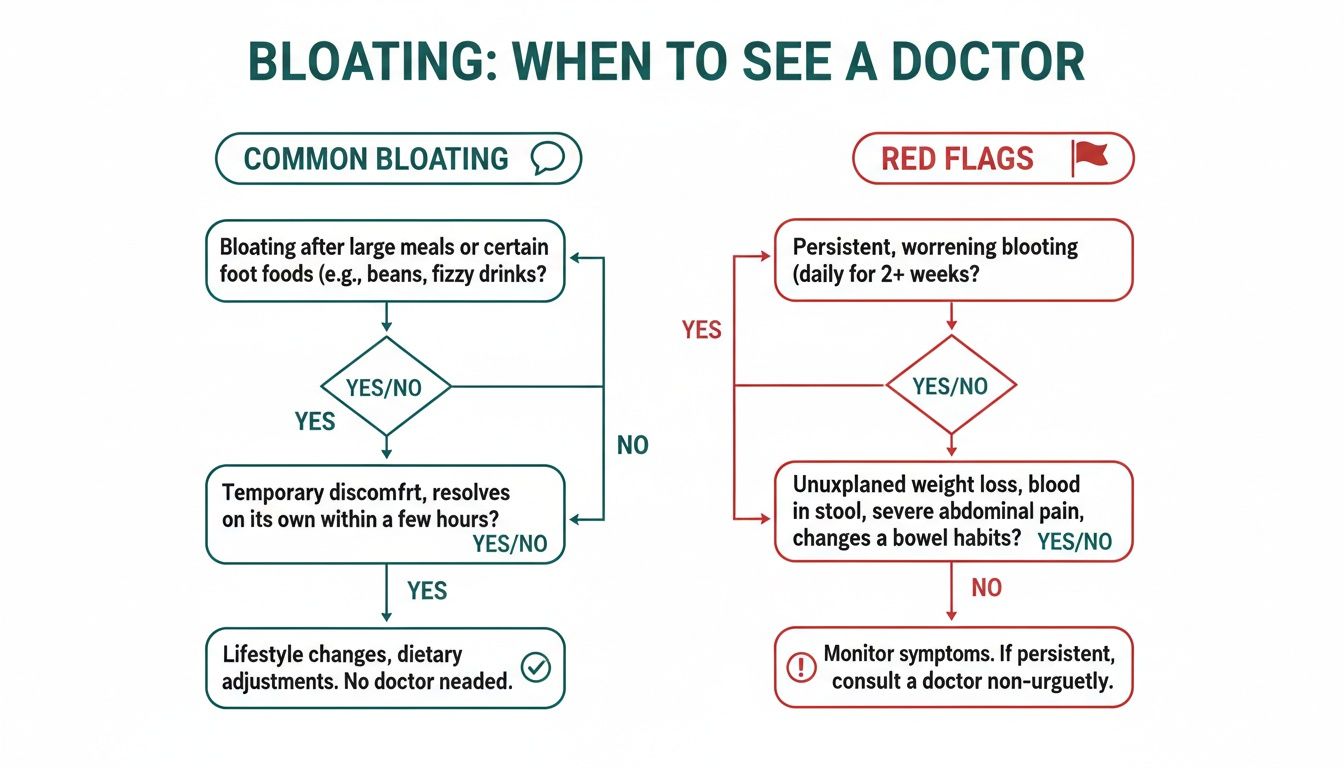
Some of the most common first-line tests include:
- Blood Tests: A simple blood sample can be used to screen for coeliac disease and check for any markers of inflammation, infection, or anaemia.
- Stool Tests: By analysing a stool sample, we can look for hidden infections, signs of inflammation in the gut, and clues about how well you’re digesting your food.
- Hydrogen Breath Tests: This is a simple, non-invasive test used to diagnose Small Intestinal Bacterial Overgrowth (SIBO) as well as intolerances to things like lactose or fructose.
When Are Advanced Procedures Needed?
Sometimes, initial tests don’t give us the full picture, or your symptoms point towards something that needs a closer look. In these cases, your specialist might recommend an endoscopy (a camera to look at your stomach) or a colonoscopy (a camera to examine your large bowel).
These procedures might sound intimidating, but they are the gold standard for getting a direct view of your digestive tract. They allow the doctor to spot any issues and, if necessary, take tiny tissue samples (biopsies) for analysis. This is how we can definitively diagnose conditions like Inflammatory Bowel Disease (IBD) or coeliac disease and, crucially, rule out anything more serious.
Ultimately, these investigations provide the clear, accurate answers needed to get to the true source of your bloating and put you on the path to feeling better.
So, What Are Your Next Steps to a Bloat-Free Life?
If you’ve been constantly asking yourself, “why am I so bloated?”, we hope this guide has shown you two things: you’re not alone, and there are real answers out there. Bloating can be a complex and genuinely distressing problem, but it’s best to think of it as a signal—your body is trying to tell you something. The most crucial thing to remember is that you don’t have to just ‘put up with’ persistent discomfort.
We’ve walked through the most common gastrointestinal reasons for bloating, from simple dietary missteps and food intolerances to more complex functional gut disorders like IBS. But the journey to feeling better always starts with one essential step: getting a proper diagnosis from a healthcare professional. It’s the only way to be absolutely sure you’re tackling the real root of the problem.
Effective, evidence-based treatments exist for all these conditions, but they hinge entirely on knowing what’s truly going on inside your gut. Guesswork and self-diagnosis often lead to more frustration, unnecessary food restrictions, and a lot of wasted time.
Think of a diagnosis as the key. Without the right one, you can’t unlock the specific treatment plan that will work for you. It’s the starting point for lasting relief.
If your bloating just won’t go away, if it’s starting to worry you, or if you’re experiencing any of the red-flag symptoms we mentioned, it’s time to take control. A vague symptom can feel like a heavy weight, but a clear diagnosis gives you a clear path forward.
Seeking a professional opinion isn’t an overreaction; it’s an empowering and responsible move towards feeling better and gaining peace of mind. A private GP or a specialist gastroenterologist can offer the expert eye and diagnostic clarity you need to finally move past the discomfort and get back to your life.
At Haven Medical, our team of consultant-led specialists is here to provide that expert assessment. The path to understanding your gut health and finding lasting relief starts with a simple conversation.
You can click to book a consultation with one of our consultant gastroenterologists or call 01202 110303 to find out more.