


We’ve all been there – feeling under the weather and facing a long, anxious wait for a doctor’s appointment. When you just want answers, choosing to get a full blood count private test is a way to get straight to the point, giving you a clear picture of your health without the delay. It’s about taking back a bit of control and getting the answers you need, when they suit you.
Why Choose a Private Full Blood Count Test
It’s completely understandable to feel a sense of unease while you wait for a GP appointment, especially if you’re dealing with nagging symptoms like constant tiredness or catching every bug that goes around. For many, arranging a full blood count private test has become a popular and practical way to get ahead of health worries.
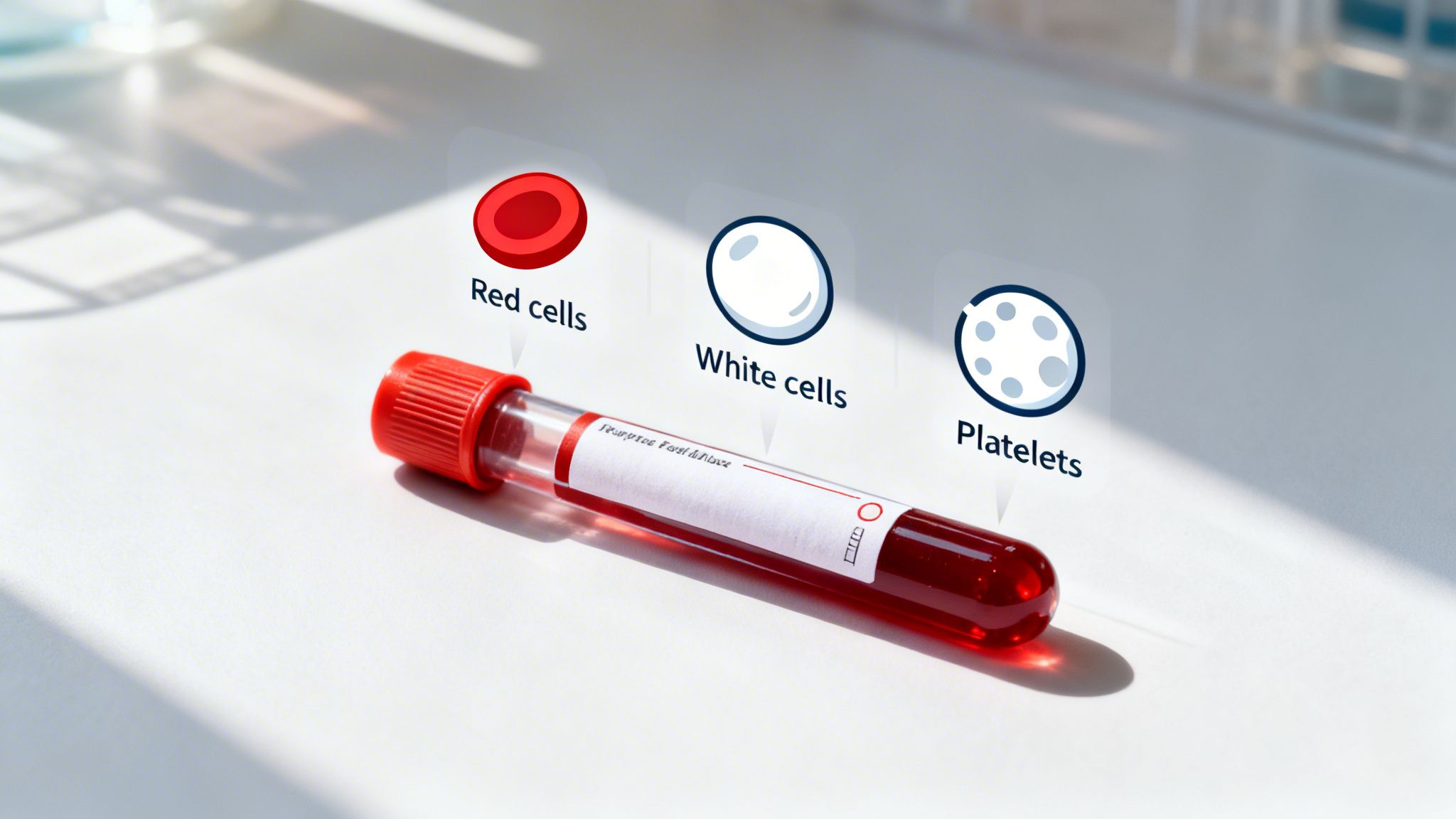
Think of a Full Blood Count (or FBC) as a detailed census of what’s happening in your blood. This simple test counts your red cells, white cells, and platelets, offering vital clues about your body’s current state. It’s one of the most common blood tests for good reason, as it can highlight signs of anaemia, infection, and a host of other underlying conditions.
The Key Drivers for Going Private
When you break it down, the decision to go private usually comes down to three things: speed, convenience, and the peace of mind that comes from having answers. When you just don’t feel right, waiting weeks for an appointment can add a lot of unnecessary stress. A private test cuts right through that.
Speed and Efficiency: at Haven Medical you can often get a test same day, completely avoiding long queues. Depending on your test, results are typically ready much faster—often within 24-48 hours. This gives you either quick reassurance or a clear starting point for what to do next.
Convenience and Accessibility: Private clinics work around your schedule, not the other way around. The process is simple; you can usually just call to book a time that fits in with your work and family commitments, and you don’t need a referral from your GP.
Being Informed and in Control: Getting direct access to your own health information puts you in the driver’s seat. It helps you have more productive, informed conversations with doctors and allows you to keep track of your health over time.
A private full blood count is more than just a test; it’s a proactive investment in your well-being. It provides the clarity needed to address concerns swiftly, monitor ongoing conditions, or establish a health baseline for the future.
Beyond a single test like the FBC, it’s also worth looking into the wider world of general health screenings to build an even more complete picture of your health.
What a Full Blood Count Actually Measures
A full blood count, or FBC, is one of the most common blood tests ordered by doctors, and for good reason. It’s a fundamental check-up for your blood, offering a clear and broad overview of your general health.
Think of it as a quick health MOT. While it won’t diagnose a specific condition on its own, the results give a vital snapshot of what’s happening inside your body. Abnormal levels can be the first clue that points towards issues like anaemia, infection, or inflammation, guiding doctors on what to investigate next.
The Three Main Workers in Your Blood
At its core, an FBC focuses on the three main types of cells circulating in your bloodstream. Each has a critical job, and checking their numbers helps to make sure everything is running as it should.
Red Blood Cells (RBCs): These are the body’s delivery drivers. Their main job is to transport oxygen from your lungs to every corner of your body, powered by a protein called haemoglobin. If your levels are low, you might feel tired and weak, which are classic signs of anaemia.
White Blood Cells (WBCs): Think of these as your immune system’s security team. The FBC counts the total number of these cells. A high count can signal that your body is fighting off an infection, whereas a low count might suggest a problem with your immune defences.
Platelets: These are your body’s first responders for injuries. When you get a cut or a scrape, platelets are the cells that clump together to form a clot and stop you from bleeding. If you bruise easily or find that cuts take a long time to stop bleeding, low platelet levels could be a factor.
It’s this insight that has driven many people to seek a full blood count private test. With growing pressure on the NHS, getting a routine blood test can be difficult to access and many people are reluctant to burden an overly stretched system. Private services offer a way to get these insights quickly, at times that suit you. This demand is part of a wider trend that has seen the UK’s clinical testing market boom, with projections suggesting it could be worth US$5,967.4 million by 2030.
Key Components of a Full Blood Count
To help you make sense of a report, the table below breaks down the key players in a full blood count. Your results are always compared against standard ‘reference ranges’ to see where your numbers fall.
Understanding these basic components empowers you to have more informed conversations with healthcare professionals. An FBC provides the data, but a medical expert provides the context, turning numbers into actionable health advice.
Ultimately, knowing what a full blood count private test shows can help you take a more proactive role in your own health. It’s a straightforward yet powerful tool that moves you from simply worrying about symptoms to taking clear, informed steps towards feeling your best.
The Private FBC Process from Booking to Results

Arranging a full blood count private test is a lot more straightforward than most people think. The whole process is designed to be clear and convenient, taking the guesswork out of healthcare appointments. It all begins when you decide you want clear answers about your health.
From there, the path is simple. Private clinics have refined their booking systems to be incredibly user-friendly, putting you in control with minimal fuss.
Step 1: Booking Your Appointment
Booking a blood test at Haven Medical couldn’t be simpler. Simply call 01202 110303 or do an online booking here . Some tests require a GP consultation as the results need to be interpreted and reviewed.
Step 2: The Clinic Visit and Blood Draw
On the day, you’ll find the clinic environment is calm and professional. It’s a world away from a crowded hospital waiting room; the experience is typically quiet, personal, and efficient.
A trained phlebotomist or nurse will handle the blood draw. The whole thing is over in minutes. They take a small sample of blood from a vein in your arm, and any discomfort is very brief. You don’t usually need any special preparation, though staying well-hydrated is always a good idea. We even have numbing cream which is highly effective at minimising any discomfort – perfect for children and needle-phobes!
Step 3: Receiving and Understanding Your Results
This is where going private really makes a difference. One of the biggest draws for people choosing a full blood count private test is the speed. Instead of waiting weeks, your results are often ready within 24 to 48 hours.
You’ll usually get your results through a detailed report via email. This gives you direct access to your own health data, empowering you to see the numbers for yourself. The next step, of course, is making sense of it all, which is where a follow-up consultation comes in.
How to Understand Your Private FBC Results
So, you’ve got your full blood count private test results back, and it’s a page full of abbreviations and numbers. It can be tempting to dive straight into a search engine to figure out what a ‘high’ or ‘low’ result means, but it’s best to pause for a moment.
Your report will list your personal results next to what’s called a reference range. This isn’t one strict ‘normal’ number. Instead, think of it as the typical range of results seen across a large group of healthy people. These ranges can even differ slightly depending on your age, sex, and the specific lab that analysed your sample.
When to Consider a Private Full Blood Count Test
Thinking about a private FBC? It’s not just for when you’re feeling ill. It’s actually a really practical way to get ahead of your health, giving you a clear snapshot of what’s going on inside your body.
Many people only think about blood tests when their GP suggests one, but going private can be a smart move for all sorts of reasons. It might be for simple peace of mind, to get fast answers about a nagging symptom, or even as part of your regular long-term health plan. Let’s explore when it makes the most sense.
For Proactive Health Monitoring
One of the best reasons to get a private FBC is as a yearly ‘health MOT’. Just like you’d service your car to catch problems before they cause a breakdown, a regular blood count helps establish what’s normal for you.
This gives you a personal baseline. Down the line, if you start feeling off, it’s much easier for you or your doctor to spot any meaningful changes. For anyone who feels healthy and wants to keep it that way, an FBC offers reassurance and a chance to catch potential issues early on.
Investigating Vague or Persistent Symptoms
Are you feeling tired all the time? Seem to be catching every bug that goes around? Vague symptoms like these can be frustratingly hard to pin down, but they can seriously drag down your quality of life. An FBC is a brilliant first step in getting to the root cause.
A full blood count can offer the first clues for common culprits behind that constant fatigue or frequent illness. For instance, low red blood cell counts might point towards anaemia, while unusual white blood cell levels could signal a low-grade infection or inflammation your body is fighting off.
Instead of waiting for a GP appointment to become available, a private FBC lets you investigate these nagging concerns right away. It’s a proactive step that can bring much-needed clarity and point you towards what to do next.
Monitoring Health and Medication
A full blood count private test is also incredibly useful for anyone managing a long-term health condition or taking certain medications. It provides a convenient way to keep track of things without adding pressure to NHS resources.
For example, some medications can impact blood cell levels, so regular checks are vital. Conditions like Crohn’s disease or rheumatoid arthritis also often require FBCs to monitor the condition and check for side effects like anaemia. Private testing makes it simple to stay on top of your health, track how well your treatment is working, and share current results with your specialist. You can simply visit website and book a test at a time that suits you.
Taking the Next Step After Your FBC Test
So, you’ve got your full blood count private test results back. This is the crucial moment where raw data transforms into real-world advice. Sitting down with a clinician is the best way to understand what those numbers mean specifically for you and your health.
No matter what the results show, you’ll leave the consultation with a clear and manageable plan. Let’s look at the most common outcomes.
Possible Paths Forward
Your follow-up conversation will focus entirely on your results and what they signal. Here are a few of the typical routes you might take:
A Clean Bill of Health: This is always the best news. If all your markers fall within the healthy range, you can have peace of mind knowing that, from a bloodwork perspective, everything looks as it should.
Lifestyle Recommendations: Often, small dips or rises in certain markers can be a sign that a few simple tweaks are needed. Your doctor might suggest changes to your diet, exercise routine, or other habits to get things back on track.
Follow-Up Testing: A borderline result isn’t necessarily a cause for alarm, but it is something to watch. Your clinician may recommend a repeat test in a few months to monitor the trend, giving you a much clearer picture over time.
Specialist Referral: If your FBC flags something that warrants a more detailed investigation, the process is straightforward. We can arrange a quick referral to the right specialist, such as a haematologist for blood disorders or a gastroenterologist for digestive issues.
Think of a private FBC not as a one-off event, but as the starting point. It helps you move from wondering about your health to actively managing it, building a detailed picture of your well-being over the long term.
Ready to understand what your body is telling you? You can visit website for more details or call to book your appointment and take the first step.
Your Questions About Private FBCs, Answered
Thinking about booking a private full blood count? It’s a smart step, but it’s completely normal to have a few practical questions first. Let’s walk through some of the most common things people ask.
Do I Need to Get a Referral from My GP?
No, you don’t need one. This is one of the biggest advantages of going private. You can take control of your health and book a test directly, without needing to see your GP first. If you’re ready to get started, you can simply call to book an appointment.
How Often Should I Have an FBC?
That’s a great question, and the answer really depends on your personal health situation.
If you’re generally healthy and just want a proactive check-up—a sort of health ‘MOT’—then getting an FBC every one to two years is a sound approach. However, if you’re using it to keep an eye on a long-term condition or to monitor how you’re reacting to medication, your clinician will give you a specific schedule based on what’s best for you.
Are My Private Test Results Shared With My NHS GP?
Your results are completely confidential. We take your privacy very seriously.
Patient confidentiality is paramount. Your private FBC results are shared only with you. They will not be sent to your NHS GP or any third party without your explicit, written consent, ensuring your health information remains completely private.
You are the only person who receives the report. If you decide you’d like to share them with your NHS doctor, we provide you with a copy that you can pass along yourself. You are always in full control of your data.
For any other queries, please feel free to visit website.