


If you’ve ever found yourself wondering what’s really going on with your gut, you’re in good company. Irritable Bowel Syndrome, or IBS, is an incredibly common, long-term condition that affects the digestive system. It’s not a disease in the typical sense but what we call a functional disorder. This simply means your gut looks perfectly healthy, but it just doesn’t work the way it should.
What Is IBS? An Introduction to Your Gut

Living with unpredictable gut symptoms can feel confusing and isolating. One day you might feel completely fine, but the next can bring a wave of uncomfortable bloating, abdominal pain, and chaotic bowel habits. This frustrating cycle is the reality for millions of people diagnosed with IBS.
Think of your gut and brain as being in constant conversation. When things are running smoothly, this communication is seamless, and digestion happens without a second thought. With IBS, that connection—often called the gut-brain axis—becomes faulty. The signals get crossed, causing the bowel to become overly sensitive and its muscle contractions to become disorganised. This is what triggers the classic symptoms of IBS.
This isn’t a rare condition by any means. In fact, it’s one of the most common gastrointestinal disorders we see. Current estimates suggest that IBS affects somewhere between 10-20% of people in the UK, making it a primary reason for referrals to gastroenterology clinics.
Clarifying the Core Symptoms
While everyone’s experience with IBS is unique, most people report a specific cluster of symptoms. Recognising these is the first step toward getting a proper diagnosis and finding relief.
- Abdominal Pain or Cramping: This is a hallmark of IBS. The pain often feels linked to needing the toilet and can range from a dull, persistent ache to sharp, debilitating cramps.
- Bloating and Gas: Many people find this one of the most distressing symptoms. It can cause a feeling of uncomfortable fullness, tightness, or even a visibly swollen stomach.
- Changes in Bowel Habits: This is the symptom that really defines the different types of IBS. It can mean your toilet habits become more or less frequent, and the consistency of your stool can change dramatically.
It’s incredibly important to understand that while IBS can significantly impact your quality of life, it does not cause physical damage to your bowel tissue or increase your risk of more serious conditions like inflammatory bowel disease or cancer.
The Three Main Types of IBS
To manage IBS effectively, we first need to identify which pattern your symptoms follow. Clinicians generally categorise IBS into three main subtypes based on your predominant bowel habit. Figuring out your type is a crucial piece of the diagnostic puzzle, as it helps tailor your treatment plan.
Below is a quick summary of the main subtypes you might hear your doctor talk about.
The Three Main Types of IBS at a Glance
| IBS Subtype | Primary Symptom | Common Experience |
|---|---|---|
| IBS-C | Constipation-Dominant | You’ll likely experience infrequent bowel movements, hard-to-pass stools, and a frustrating feeling of not being able to fully empty your bowels. |
| IBS-D | Diarrhoea-Dominant | This type involves frequent, loose, or watery stools, often accompanied by a sudden and urgent need to find a toilet. |
| IBS-M | Mixed Bowel Habits | Just as it sounds, this is an alternating pattern of both constipation and diarrhoea, sometimes even on the same day. |
Knowing these patterns isn’t just a technical detail; it’s a practical tool. The strategies that help relieve constipation, for instance, are completely different from those used to manage diarrhoea. If your symptoms seem to fit one of these profiles, the next logical step is to speak with a healthcare professional to get clarity and start on the path to feeling better.
Decoding Your Symptoms and Identifying Your IBS Type
Getting to the bottom of your symptoms is the very first step towards feeling better. But if you have IBS, you already know it’s far more personal than any simple checklist. The classic trio of abdominal pain, bloating, and chaotic bowel habits shows up differently for everyone, creating a daily reality that can be both frustrating and deeply disruptive.
Take the abdominal pain, for example. It’s rarely just one type of feeling. For some, it’s a persistent, dull ache that hangs around like an unwelcome guest. For others, it’s a sudden, sharp cramp that can literally stop you in your tracks, often followed by a desperate dash to the toilet. This unpredictable nature is a huge part of what makes living with IBS so maddening.
And the bloating is more than just feeling a bit full after a big meal. It can feel like trapped wind that just won’t shift, a tightness that makes your waistband feel two sizes too small, or even cause your stomach to visibly swell. These symptoms aren’t just uncomfortable; they can seriously knock your confidence and dictate everything from what you wear to whether you go out at all.
Pinpointing Your IBS Type: C, D, or M?
While the main symptoms are common ground, the dominant pattern of your bowel habits helps us identify which specific type of IBS you have. This isn’t just about giving it a label; it’s the single most important clue for creating a management plan that actually works. After all, the strategies that relieve constipation are the complete opposite of what you’d do to manage diarrhoea.
- IBS with Constipation (IBS-C): This is when your stools are hard and lumpy more than 25% of the time, and loose or watery less than 25% of the time. If you have IBS-C, your life might involve a lot of straining, feeling like you haven’t fully emptied your bowels, and often going less than three times a week.
- IBS with Diarrhoea (IBS-D): This is the other side of the coin. You’ll experience loose, watery stools more than 25% of the time and hard stools less than 25% of the time. The hallmark of IBS-D is often that sudden, overwhelming urgency – the feeling that you must find a bathroom, right now.
- IBS with Mixed Bowel Habits (IBS-M): This is perhaps the most unpredictable pattern, where you swing between both extremes. You’ll have hard stools at least 25% of the time and loose stools at least 25% of the time. It can feel like a rollercoaster, with a few days of constipation suddenly giving way to a bout of diarrhoea.
Identifying which pattern you fit into is a real breakthrough. It means you and your specialist can stop guessing and start focusing on targeted, evidence-based strategies that are most likely to bring you relief.
A Day in the Life With Different IBS Types
To put this into perspective, let’s look at how these types can feel day-to-day.
Scenario 1: Sarah with IBS-C
Sarah often wakes up feeling heavy and bloated. Trying to go to the toilet is a frustrating and uncomfortable ordeal that leaves her feeling like she hasn’t finished. For the rest of the day, she feels uncomfortably full, choosing loose clothing to hide her swollen tummy and dreading the thought of how long it might be until she can go again.
Scenario 2: David with IBS-D
David’s morning routine is dictated by his gut. He won’t leave the house without knowing exactly where the nearest toilets are on his commute. A last-minute meeting or a friend’s dinner invitation can spark a wave of anxiety, not about the event itself, but about the terrifying possibility of a sudden, urgent attack of diarrhoea.
It’s Not All in the Gut
The effects of IBS often ripple outwards, causing a range of other symptoms that can impact your overall quality of life. It’s so important to recognise these related issues so you can have a full, honest conversation when you visit website.
Many people with IBS also experience:
- Persistent Fatigue: Feeling completely drained of energy is incredibly common, often a result of poor sleep, chronic pain, and the toll stress takes on the body.
- Nausea: That queasy, sick feeling can pop up with or without a clear link to meals.
- Backache: This is often a knock-on effect from cramping or being severely constipated.
- Bladder Issues: Some people find they need to urinate more frequently or urgently.
If any of this sounds painfully familiar, please know that you are not on your own and that effective support is out there. The first, most powerful step is to start tracking your symptoms and share the full story with a healthcare professional.
What Causes and Triggers IBS?
One of the most frustrating things about living with IBS is often the mystery behind it. There isn’t a single, straightforward cause. Instead, it’s more like a combination of factors that, together, create the conditions for your symptoms to appear.
Think of it less like flipping a single light switch and more like a sensitive sound system where several dials—stress, diet, gut health—are all turned up a little too high. Figuring out which dials affect you is the first step toward getting relief.
The Gut-Brain Axis: A Crucial Miscommunication
At the very core of IBS is something we call the gut-brain axis. This is the constant, two-way superhighway of information running between your digestive system and your brain. For most people, this communication happens quietly in the background. But in IBS, the signals get scrambled.
It’s like trying to have a conversation on a bad phone line. Your gut might send an exaggerated pain signal to your brain in response to normal digestion. Or your brain, when you’re feeling stressed, might fire off signals that either speed up your gut (causing diarrhoea) or slow it right down (leading to constipation). This explains why your mood can have such a direct and immediate impact on your stomach.
Visceral Hypersensitivity: An Overly Sensitive Gut
Another major piece of the puzzle is visceral hypersensitivity. It’s a technical-sounding term, but it simply means the nerves in your gut are on high alert. For someone with IBS, normal events like gas moving through the bowel or the usual muscle contractions of digestion can feel intensely uncomfortable or even painful. Things other people wouldn’t even notice.
This extra sensitivity is often tied to a couple of other key issues:
- Altered Gut Motility: The muscles in your digestive tract are meant to contract in a smooth, rhythmic way to move food along. In IBS, this rhythm gets disorganised. The contractions can become too fast and chaotic, causing diarrhoea, or too slow and sluggish, resulting in constipation.
- Post-Infectious IBS (PI-IBS): Did your symptoms kick off after a nasty stomach bug or a bout of food poisoning? This is a well-known pattern. A severe gut infection can sometimes leave the gut lining and its nervous system in a hyper-reactive state long after the bug itself is gone, triggering chronic IBS symptoms.
These underlying problems are what lead to the different “types” of IBS you might hear about.

As you can see, whether your gut motility is too fast or too slow is what ultimately determines if you experience constipation-predominant (IBS-C), diarrhoea-predominant (IBS-D), or a mix of both (IBS-M).
Other Key Factors: Genetics, Gut Bacteria, and Stress
On top of the gut-brain connection, we know that several other elements can increase your risk of developing IBS or act as triggers for your flare-ups.
Understanding your personal risk factors and triggers isn’t about placing blame; it’s about gathering clues. Each clue helps you and your specialist build a more effective and personalised management plan.
For instance, we see clear patterns in who gets IBS. In the UK, women are much more likely to be diagnosed, accounting for about 60-65% of all cases. We also know that stress is a huge factor, with research suggesting it acts as a primary trigger in more than half of all IBS episodes. You can explore the UK-specific findings to get a fuller picture of the research.
Other important contributing factors include:
- Gut Microbiome Imbalance: The trillions of bacteria living in your gut are essential for good health. In many people with IBS, the balance of these microbes is off. This imbalance, sometimes called dysbiosis, can affect digestion and sensitivity.
- Genetics: IBS definitely seems to run in families. While there isn’t one specific “IBS gene,” having a parent or sibling with the condition might mean you’re more predisposed to it.
- Psychological Factors: Because of that powerful gut-brain link, a history of anxiety, depression, or experiencing a period of intense life stress can make you more vulnerable to developing IBS.
By getting to grips with these potential causes, you’re in a much stronger position to have a productive conversation with a doctor and figure out which strategies will work best for you.
How Doctors Diagnose IBS in the UK
Getting a clear diagnosis when you’re struggling with persistent gut symptoms is often the first real step towards feeling in control again. If you’ve been wondering “what is IBS?” and the symptoms sound all too familiar, seeing a doctor is the right move. Here in the UK, diagnosing Irritable Bowel Syndrome is a careful process of listening, examining, and ruling out other possibilities to give you a confident answer.
Your journey will almost always begin with your GP. There’s no single, definitive test for IBS—no simple blood test or scan that says “yes, this is it.” Instead, think of your doctor as a detective, gathering clues from your personal experience to build a complete picture.
Be prepared to talk openly about your symptoms and, yes, your bowel habits. It might feel awkward, but for your doctor, it’s a routine and essential conversation. They’ll want to know what your symptoms feel like, how often they flare up, and the real-world impact they’re having on your daily life.
The Diagnostic Checklist
To bring structure to this process, doctors in the UK rely on a framework known as the Rome IV criteria. This isn’t a test you can pass or fail, but rather a set of guidelines that helps them recognise the classic pattern of IBS.
To be diagnosed with IBS based on these criteria, you’ll typically have experienced abdominal pain at least one day a week over the last three months. This pain will also be linked to two or more of the following:
- It gets better or worse after you have a poo.
- It comes along with a change in how often you need to go to the toilet.
- It’s associated with a change in the consistency of your poo (what it looks like).
This focus on the relationship between pain and your toilet habits is the key. It points towards a functional issue—a problem with how the gut is working, rather than a sign of physical damage or disease.
Ruling Out Other Conditions
A crucial part of any IBS diagnosis is making sure it isn’t something else. Your GP’s first priority is to check for any “red flag” symptoms that might suggest a different condition, like Inflammatory Bowel Disease (IBD) or coeliac disease.
They will carry out a physical examination, usually by gently feeling your abdomen for any lumps or tender spots. After that, they’ll arrange a few routine blood tests. These aren’t designed to find IBS, but to look for signs of other problems:
- Full Blood Count: This checks for anaemia (a low red blood cell count), which could indicate bleeding somewhere in the gut.
- Inflammatory Markers (CRP): This looks for inflammation in the body. IBS doesn’t cause inflammation, but IBD does.
- Coeliac Disease Screen: This blood test checks for antibodies that suggest your symptoms might be caused by a reaction to gluten.
You can think of the diagnostic process as one of elimination. If your symptoms fit the classic IBS pattern and the tests for other conditions all come back clear, your doctor can make a positive diagnosis of Irritable Bowel Syndrome.
IBS vs IBD: What’s the Difference?
It’s so important to understand the distinction between IBS and Inflammatory Bowel Disease (IBD), a term that covers conditions like Crohn’s disease and ulcerative colitis. While the symptoms can sometimes overlap, they are fundamentally different.
IBS is a functional disorder; your gut is perfectly healthy on scans and tests, but it’s hypersensitive and doesn’t function as it should. IBD, on the other hand, is a disease where the immune system attacks the gut, causing chronic inflammation and physical damage to the bowel lining. This is precisely why checking for inflammation is a non-negotiable step.
If any of your tests show red flags—like unexplained weight loss, blood in your stool, or high inflammatory markers—your GP will refer you for further investigations. While this can feel worrying, it’s a vital safety net. The diagnostic journey has a significant impact, with the NHS facing annual costs of over £250 million for IBS-related care, partly due to these essential investigative procedures.
Ultimately, a formal diagnosis is your gateway to effective management. It takes you from a place of uncertainty to one of clarity, unlocking the right support and starting you on the path to feeling better.
Your Toolkit for Managing IBS Symptoms
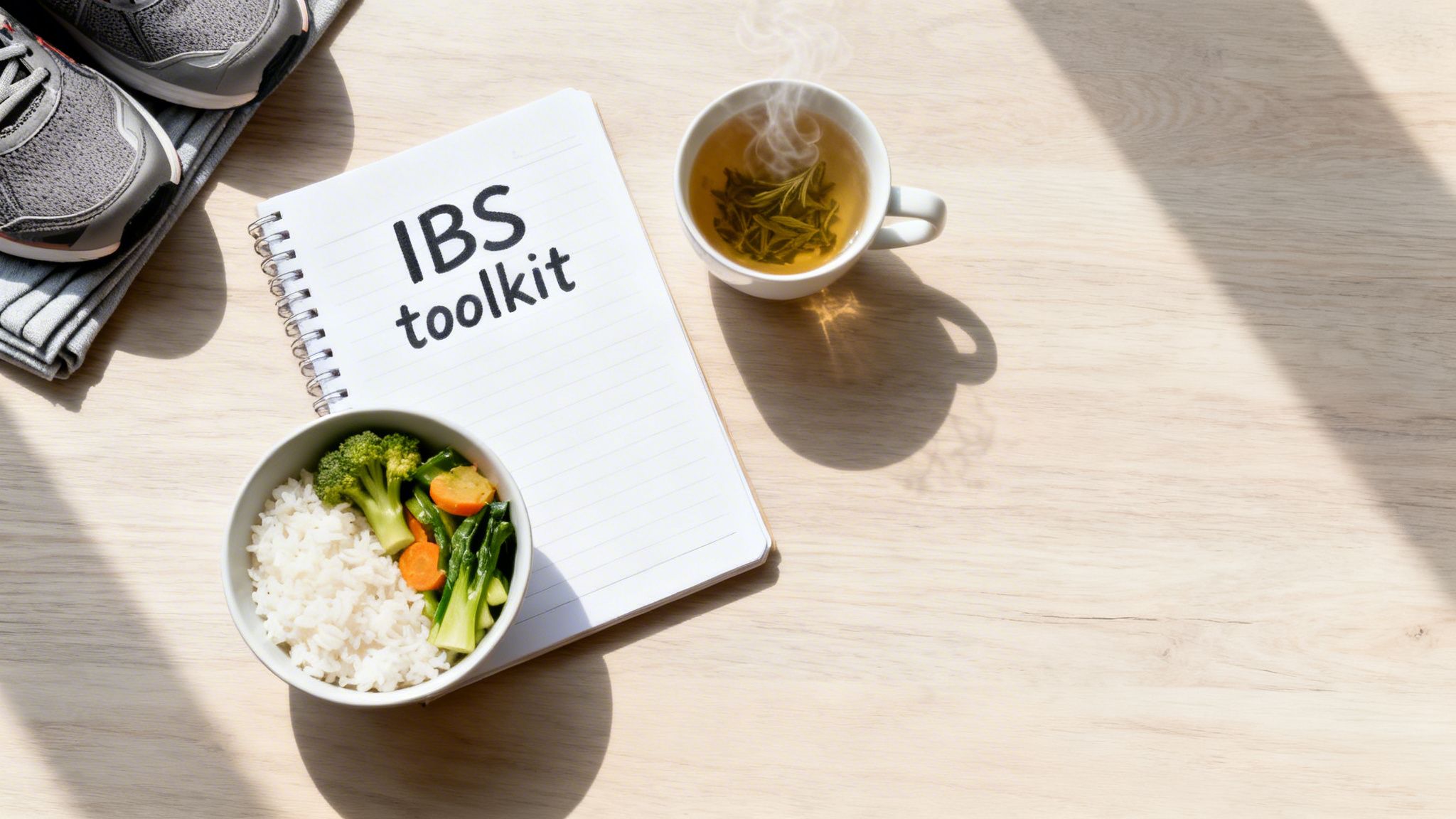
Getting an IBS diagnosis can be a relief, but it often leads to the most important question of all: “So, what can I actually do about it?” The answer isn’t a single magic pill. Instead, it’s about building a personal toolkit of strategies to calm your symptoms, head off flare-ups, and get your life back.
Think of it as a practical, layered approach that puts you in the driver’s seat. By combining diet, lifestyle changes, and sometimes medication, you can figure out what truly works for your body. Let’s break down the three main pillars of a successful IBS management plan.
First-Line Dietary Strategies
For most people, the path to feeling better begins on their plate. Dietary tweaks are often the first step, not because food causes IBS, but because what you eat has a direct impact on how your gut feels and functions. The goal here is to soothe your system, not put it through more stress.
You might be surprised how much of a difference these simple, first-line changes can make:
- Eat by the Clock: Try to have your meals at roughly the same time each day. Skipping meals or leaving long gaps can make your digestive system unpredictable and unhappy.
- Hydrate, Hydrate, Hydrate: Aim for at least eight cups of fluid a day, mostly water. This is a game-changer for IBS-C, as it helps to soften stools and keep things moving.
- Go Easy on Triggers: Common culprits often include very fatty, spicy, or heavily processed foods. The same goes for too much caffeine or alcohol. You don’t have to banish them forever, but finding a sensible balance is key.
Learning how different foods affect you is fundamental. For example, understanding how high fiber vegetables can help manage IBS can bring huge relief for some, especially those struggling with constipation.
A Closer Look at the Low FODMAP Diet
What if that initial advice isn’t quite enough? If symptoms persist, your doctor or a dietitian might suggest looking into the low FODMAP diet. It’s crucial to understand that this isn’t a life-long diet; it’s a short-term diagnostic tool to pinpoint your specific food triggers with precision.
So, what are FODMAPs? They’re a group of short-chain carbohydrates that your small intestine can struggle to absorb. When they travel to the large intestine, gut bacteria have a feast, fermenting them rapidly. This process pulls in water and creates gas, which, in a sensitive gut, can lead to pain, bloating, wind, and diarrhoea.
The low FODMAP diet is a strict, three-stage process: Elimination, Reintroduction, and Personalisation. It’s really important to do this with a trained dietitian. They’ll make sure you don’t miss out on vital nutrients and help you make sense of your body’s reactions.
Here’s how it works:
- Elimination: You’ll cut out all high-FODMAP foods for 2-6 weeks. This gives your gut a break and allows your symptoms to settle down.
- Reintroduction: You’ll start bringing back individual FODMAP groups, one at a time, in a controlled way. This is the detective work phase, where you test your tolerance.
- Personalisation: Armed with this knowledge, you can build a long-term diet that includes as much variety as possible, while limiting only the foods that you know cause you problems.
Medications and Therapies
Alongside dietary changes, medications and therapies can be incredibly valuable tools in your kit, offering both immediate relief during a flare-up and long-term support.
Over-the-Counter and Prescribed Aids:
- For Diarrhoea: Medications like Loperamide can help slow down your gut and firm up your stools.
- For Constipation: Various laxatives are available, but it’s important to work with a professional to find the right type for your needs.
- For Pain and Cramping: Antispasmodics, such as mebeverine or peppermint oil capsules, work by relaxing the muscles in your gut wall.
- For the Gut-Brain Axis: Sometimes, a doctor may prescribe a low dose of certain antidepressants. This isn’t for depression, but because these drugs can help calm the sensitive nerve signals between the brain and the gut.
Beyond the pharmacy, there’s growing evidence for psychological therapies that target this powerful gut-brain connection. Gut-directed hypnotherapy and Cognitive Behavioural Therapy (CBT) have been shown to be highly effective, helping you reframe your response to symptoms and reduce the impact of stress on your gut.
Finally, never underestimate the simple power of lifestyle. Gentle, regular exercise like walking or yoga is fantastic for regulating bowel function and busting stress. Prioritising sleep and finding a stress management technique that works for you—be it mindfulness, meditation, or a new hobby—can dramatically reduce the severity of your symptoms. With these strategies, you can build your resilience and take back control from IBS.
When to See a Private Gastroenterologist
Your GP is always the best place to start when you have any health concerns, and that absolutely includes gut symptoms. But what if your IBS symptoms aren’t getting any better? Perhaps you’re still waiting for a clear diagnosis, or you just feel you need to see a specialist sooner rather than later. This is often the point where looking into private gastroenterology can make a real difference.
The Benefits of Specialist-Led Care
A gastroenterologist has spent their entire career focused on conditions like IBS. That level of dedicated expertise is hard to overstate. They often have access to a broader range of diagnostic tools and management strategies that may not be immediately available in primary care.
Choosing to go private typically offers a few key advantages:
- Faster Access: You can usually get an appointment much more quickly. This cuts down the anxious waiting time and puts you on the path to relief sooner.
- Consultant-Led Expertise: From your very first appointment, your care is overseen by a specialist. This ensures a high level of experience is guiding every decision.
- Dedicated Time: Private consultations are generally longer. This gives you the space to properly explain your symptoms and medical history, and it allows the consultant to build a truly personalised plan for you.
This isn’t about ‘skipping the queue’. It’s about taking a proactive step for your own health, putting you back in the driver’s seat and giving you access to specialist resources focused on getting you better.
What to Expect from Haven Medical
When you make the decision to seek private care for your digestive health, you’re taking a significant step towards feeling like yourself again. At Haven Medical, we’ve built our gastroenterology service around this very idea, recognising just how much conditions like IBS can affect your life.
We bring together diagnostics, consultant expertise, and therapeutic support all in one place. This creates a smooth, continuous journey for you – from your initial consultation and tests right through to developing a comprehensive management plan.
Taking that first step can feel like the biggest hurdle.
Your IBS Questions, Answered
We get a lot of questions from patients about Irritable Bowel Syndrome. It’s a confusing condition, and there’s a lot of misinformation out there. Let’s tackle some of the most common concerns we hear every day.
Is IBS a Serious Condition?
This is often the first thing people worry about, so let’s clear this one up right away.
Can IBS turn into something more serious, like cancer?
No. This is a very common and understandable fear, but rest assured, IBS is a functional disorder. This means that while the function of your gut is disturbed, there’s no physical damage or disease in your intestines. It absolutely does not increase your risk of cancer or lead to inflammatory conditions like Crohn’s disease or ulcerative colitis.
That said, getting a proper medical diagnosis is the only way to confidently rule out those other possibilities and confirm that IBS is what you’re dealing with.
How do I know if it’s IBS or just a ‘sensitive stomach’?
Many people have a ‘sensitive stomach’ from time to time, but an IBS diagnosis comes down to a specific pattern. Doctors look for recurring abdominal pain that’s linked to your bowel movements—either getting better or worse after you go. This is usually accompanied by a change in how often you go or in the consistency of your stool.
What Is Treatment Like?
Will I have to follow a restrictive diet forever?
Almost certainly not. Diets like the low FODMAP plan are best thought of as a temporary investigation, not a lifelong sentence. We use them for a short period to systematically identify your personal trigger foods.
The end goal is always the same: to get you back to eating the widest, most varied, and most enjoyable diet possible, just without the foods that cause you trouble.
While there isn’t a single ‘cure’ for IBS, it is a highly manageable condition. Through a combination of the right dietary advice, lifestyle adjustments, and targeted treatments, the vast majority of people can significantly reduce their symptoms and achieve long-term relief. It’s entirely possible to lead a normal, healthy life with IBS.