



A meal is supposed to leave you feeling settled. Instead, you finish eating and notice a wave of nausea, pressure in your upper stomach, bloating, or a sour feeling rising into your chest.
That experience is unsettling. It can also be confusing, especially when it does not happen every time, or when the food that seems to trigger it is not obviously “unhealthy”.
If you have been typing why do i feel sick after eating into your phone after lunch or dinner, you are asking an important question. Nausea after meals is not a diagnosis in itself. It is your body’s way of signalling that something about digestion, food tolerance, stomach emptying, acid flow, or even the gut-brain connection is not working.
Sometimes the explanation is simple. You may have eaten too quickly, eaten more than your stomach was comfortable handling, or had a meal that triggers reflux. In other cases, the pattern points to something that deserves proper assessment, such as food hypersensitivity, reflux disease, delayed stomach emptying, or a less obvious overlap between digestive symptoms and neurodivergence.
The good news is that symptom patterns often tell a story. The timing matters. The type of food matters. The setting matters. Whether you feel sick immediately, half an hour later, or several hours later can help narrow things down.
That Uncomfortable Feeling After a Meal
You sit down, eat something ordinary, and for a few minutes all seems fine. Then the shift begins. Your stomach feels heavy. You lose interest in finishing your drink. Perhaps you feel a little clammy, a little bloated, or as though the food is just “sitting there”.
Many people describe this in similar ways. One person says, “I feel full too quickly.” Another says, “It is not pain exactly, just a sick feeling after I eat.” Someone else notices it only after creamy foods, spicy takeaways, or rushed lunches eaten between meetings.
That variety is what makes the symptom so frustrating. The same word, nausea, can come from very different processes in the body.
For some people, the problem starts in the stomach. For others, it begins with food that their body reacts to poorly. Some notice symptoms when acid rises upward after a meal. Others feel unwell later, when digestion slows down or the small bowel becomes irritated.
A few readers will also recognise another pattern. They do not just feel physically sick. They feel tense around food, overwhelmed by texture or smell, or thrown off by irregular eating habits. That matters too.
Key takeaway: Feeling sick after eating is common enough to deserve attention, but specific enough that the details of your symptoms can help uncover the cause.
When I speak to patients about this, I often encourage them to think like observers rather than judges. You do not need to decide what is wrong on your own. You only need to notice the pattern carefully.
Understanding Your Digestive System's Signals
Digestion starts before food reaches your stomach. Your brain notices the sight, smell, and expectation of a meal, then helps switch on saliva, stomach acid, and muscle activity in the gut. By the time you swallow, several parts of the body are already working together.
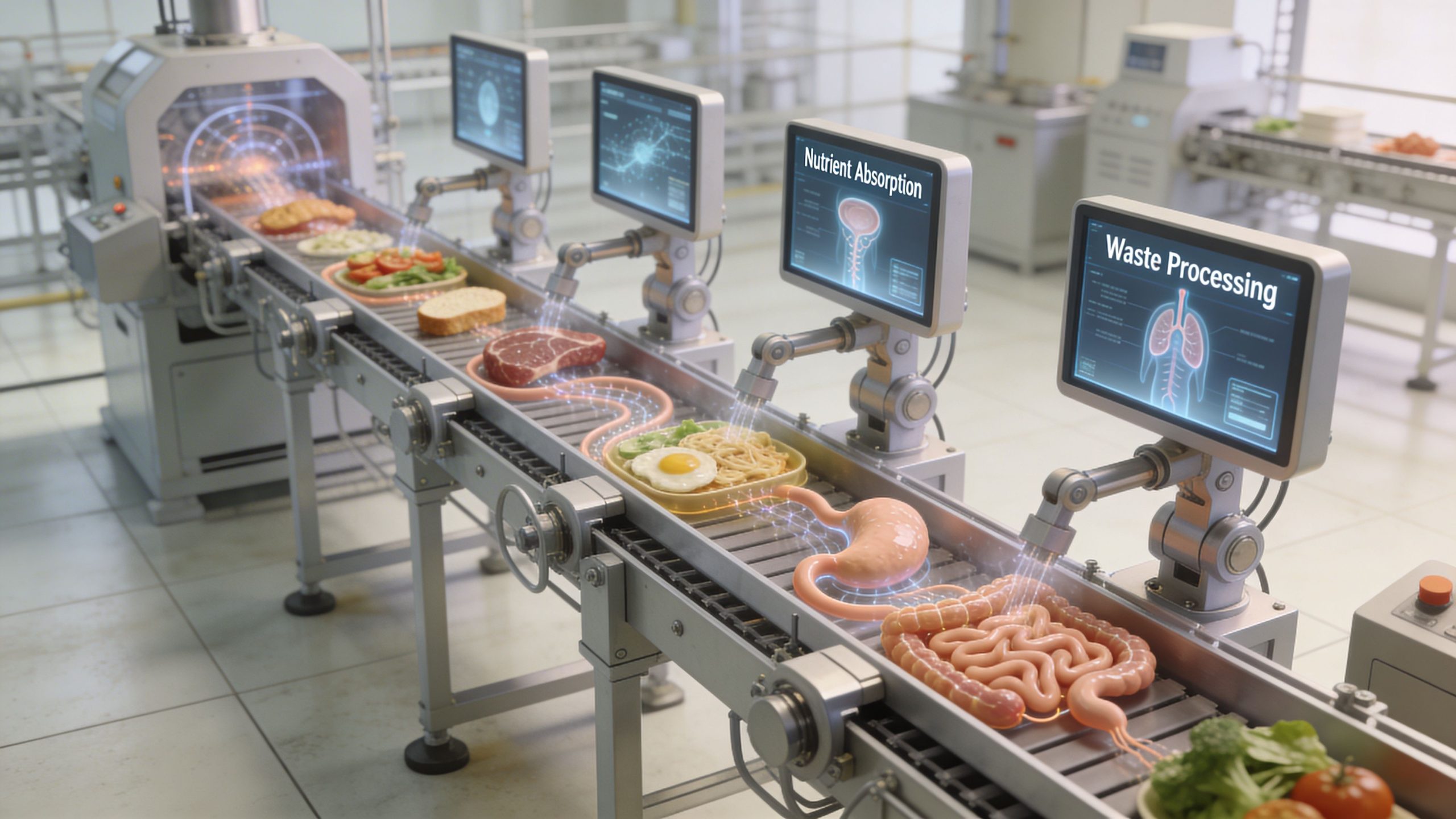
How the process is supposed to work
Your mouth breaks food down mechanically through chewing, while saliva starts chemical digestion. The oesophagus then moves food into the stomach in a coordinated wave.
The stomach stores the meal for a time, mixes it with acid and digestive juices, and releases it onward in controlled amounts. That pacing matters. If food moves through too fast, too slowly, or in the wrong direction, you may feel sick, overfull, bloated, or uncomfortable.
Next, the small intestine takes over much of the detailed work. Bile helps with fats. Enzymes split food into smaller parts that can be absorbed into the bloodstream.
This process is quiet when it goes well.
Why nausea happens
Nausea is one of the body’s warning signals. It does not point to one single problem. It tells you that something about the meal, the movement of the gut, or the brain-gut signalling did not feel right to your system.
Doctors often sort the possibilities by mechanism:
- Too much stretch in the stomach. Large, heavy, or rich meals can leave the stomach feeling under pressure.
- Irritation in the lining of the stomach or oesophagus. Acid, inflammation, alcohol, infection, or some medicines can trigger this.
- Delayed emptying. Food stays in the stomach longer than expected, which can create fullness and queasiness.
- Reflux. Stomach contents rise upward and cause burning, nausea, or an unpleasant taste.
- A reaction to a food. This may involve allergy, intolerance, or other forms of food sensitivities.
- Changes in gut-brain signalling. Stress, anxiety, sensory overload, and nervous system differences can change how eating feels.
That last point is often missed. Some people, including people with ADHD or autism, notice that texture, smell, routine changes, fast eating, or forgetting meals until they are very hungry can all make post-meal nausea more likely. The stomach and brain are in constant conversation. If the message is scrambled, the result can feel very physical.
Timing can help narrow the cause
When the nausea starts often gives useful clues.
| When you feel sick | What it may suggest qualitatively |
|---|---|
| Almost immediately | Smell, texture, anxiety, swallowing air, or eating very quickly |
| Soon after eating | Reflux, stomach irritation, or an early food reaction |
| Toward the end of a meal | Fullness, stomach stretch, or slow stomach emptying |
| A few hours later | Delayed digestion, bile-related problems, or patterns such as bacterial overgrowth |
Timing is not a diagnosis. It is more like a map reference. It helps your GP decide which questions to ask next and whether you may need blood tests, stool tests, allergy assessment, or referral to a gastroenterologist.
Why the same meal can affect people differently
Patients often assume that if a food causes nausea, the food must be the whole story. In practice, the context matters too. Meal size, how quickly you ate, your sleep, stress, menstrual cycle, medicines, blood sugar swings, and the setting around the meal can all change the digestive response.
A sandwich eaten calmly at home may be tolerated well. The same sandwich eaten after skipping breakfast, rushing between meetings, and feeling overstimulated may leave you nauseated.
This is one reason the UK diagnostic journey can take time. A GP usually starts by looking for patterns, ruling out red flags, and deciding whether the next step is treatment, testing, or referral. At Haven Medical, we often help patients organise that pattern, especially when symptoms sit at the overlap between digestion, allergy, and neurodivergent sensory experience.
Tip: Keep a brief record of what you ate, when symptoms started, how fast you ate, and how you felt before the meal. Those details often make the picture clearer.
Common Reasons You Feel Unwell After Meals
You finish dinner, push your plate away, and within minutes feel queasy, bloated, or oddly uncomfortable. That pattern is common, but the reason is not always obvious. Your stomach and gut are a bit like a sorting and transport system. If the wrong item goes in, too much arrives at once, or the signalling between the brain and gut is off, the whole process can feel unpleasant.
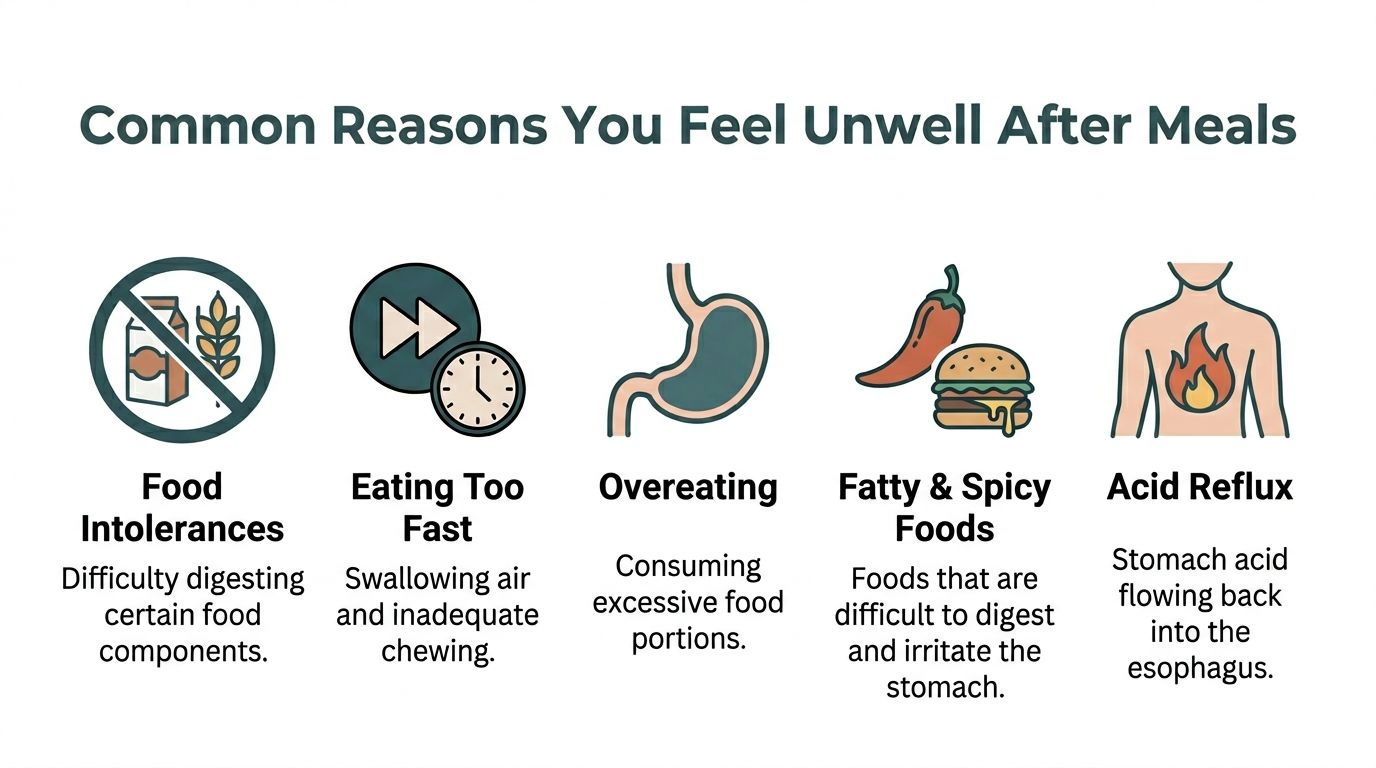
Food intolerance and food allergy are not the same
These terms get mixed up often, but they describe different problems.
A food allergy involves the immune system reacting to a food protein. A food intolerance usually means the body struggles to digest or process part of a food. Both can leave you feeling sick after eating, yet they point clinicians in different directions.
For example, lactose intolerance often causes bloating, wind, cramping, and nausea after dairy. A food allergy may bring nausea too, but it can also come with itching, swelling, hives, wheezing, or a sense that the reaction is spreading beyond the gut. The NHS explains these differences clearly in its guidance on food allergy and intolerance.
Typical clues include:
- The same trigger repeatedly causes symptoms
- Nausea comes with bloating, cramps, or loose stools
- Symptoms improve when that food is avoided
- Other allergy-type symptoms appear, such as rash, swelling, or wheeze
If this sounds familiar, it can help to learn more about how clinicians think about food sensitivities, especially the difference between a true allergy, an intolerance, and a broader food-trigger pattern.
In UK practice, a GP will usually start by taking a careful history rather than jumping straight to broad testing. If the pattern suggests allergy, referral or targeted testing may be appropriate. If it looks more like intolerance, the next step is often a structured food diary, guided elimination, or assessment for conditions such as lactose malabsorption or coeliac disease.
Reflux can cause nausea, not just heartburn
Reflux is easy to miss if you are expecting a dramatic burning pain. Some patients mainly notice nausea, throat discomfort, burping, or a sour taste after meals.
The mechanism is simple. Stomach contents move upward into the oesophagus, where they cause irritation. That irritation can feel like burning, but it can also feel like sickness, especially after large meals or when you bend over or lie down too soon after eating. NICE outlines the usual features of reflux and dyspepsia in its guidance on gastro-oesophageal reflux disease and dyspepsia.
You may notice:
- nausea with a burning feeling in the chest or throat
- a sour or bitter taste in the mouth
- symptoms that are worse after fatty meals or late-night eating
- discomfort when lying flat after food
Eating too fast can make a normal meal feel awful
Sometimes the food is not the main problem. The pace is.
If you eat quickly, the stomach receives poorly chewed food, extra swallowed air, and a larger volume before fullness signals have time to catch up. It is a bit like loading suitcases onto an airport belt faster than the system can carry them away. You end up with pressure, backup, and discomfort.
This matters even more for some people with ADHD or autism, where eating patterns can be affected by distraction, hyperfocus, sensory aversions, routine-based eating, or reaching meals very hungry after forgetting to eat earlier in the day. In clinic, that can look like “mystery nausea” after food when the deeper issue is meal timing, sensory stress, fast eating, or nervous system overload rather than a single harmful ingredient.
Common clues include:
- feeling uncomfortably full very quickly
- bloating or trapped wind during the meal
- nausea after rushed lunches or eating on the go
- symptoms that improve when meals are slower and smaller
Large, fatty, or spicy meals can overwhelm a sensitive system
Fat slows stomach emptying. Rich meals also relax the valve between the stomach and oesophagus in some people, which can make reflux more likely. Spicy foods may irritate an already sensitive upper digestive tract.
That does not mean these foods are “bad”. It means they can expose an underlying sensitivity. A takeaway meal eaten late, quickly, and under stress is far more likely to cause trouble than the same ingredients eaten earlier, in a smaller portion, in a calmer setting.
A quick comparison of common patterns
| Pattern | What people often notice |
|---|---|
| Food intolerance | The same ingredient repeatedly triggers nausea, bloating, wind, or bowel upset |
| Food allergy | Symptoms may start quickly and can include skin, breathing, or swelling symptoms as well as nausea |
| Reflux | Sourness, chest or throat discomfort, burping, and nausea after meals |
| Fast eating | Fullness, pressure, trapped wind, and nausea during or soon after eating |
| Large or rich meals | Heaviness, delayed comfort, and a feeling that the meal is sitting in the stomach |
The aim is not to diagnose yourself from a table. It is to recognise patterns that are worth discussing with a GP. That is often the first useful step in the UK diagnostic journey, whether you need simple advice, testing through an allergy service, or referral to a gastroenterologist.
Serious Conditions That Can Cause Post-Meal Sickness
Some cases of nausea after eating go beyond ordinary indigestion. When symptoms are persistent, worsening, or linked with other warning signs, a more serious digestive problem has to be considered.
Gastroparesis and delayed stomach emptying
A healthy stomach does not just store food. It grinds it and releases it onward in a controlled way.
With gastroparesis, that emptying process slows down. Verified data notes that gastroparesis involves impaired gastric muscle contractility, with transit times exceeding 3 to 4 hours, compared with a normal range of 1.5 to 2 hours, as described in this explanation of nausea after eating.
When food remains in the stomach too long, several things can happen:
- the stomach stretches and feels uncomfortably full
- acid sits against food for longer
- undigested carbohydrates can ferment and produce gas
Patients often describe this as early fullness, nausea after only small amounts of food, or a meal that seems to “just stay there”. It can be associated with long-standing diabetes, certain medicines such as opioids or anticholinergics, and severe nutritional restriction.
Bile flow, gallbladder problems, and SIBO patterns
Bile helps your body process fats and supports normal movement through the small intestine. When bile production or bile delivery is impaired, digestion can become sluggish.
Verified information also notes that bile acid insufficiency can contribute to Small Intestinal Bacterial Overgrowth, or SIBO. The reasoning is that low bile compromises motility and reduces part of the gut’s antimicrobial defence, allowing bacteria to build up and contribute to delayed nausea and bloating.
That is one reason some people feel unwell not immediately after eating, but hours later, especially after heavier meals.
A related issue is gallbladder dysfunction. The body may struggle more after fatty foods, and nausea can occur with upper abdominal discomfort. While symptoms can overlap with reflux or indigestion, the timing and associated pain pattern may point the assessment in a different direction.
Ulcers and stomach lining irritation
Peptic ulcers or significant gastritis can also cause nausea after meals. Some patients expect ulcers to cause only pain, but irritation of the stomach or duodenal lining can produce a sick, gnawing, unsettled feeling.
Meals may briefly soothe symptoms in some people and aggravate them in others. That inconsistency is one reason proper assessment matters.
Red flags that should not be ignored
Post-meal nausea deserves prompt medical review if it comes with any of the following:
- Difficulty swallowing
- Persistent vomiting
- Unexplained weight loss
- Severe or worsening abdominal pain
- Vomiting blood or passing black stools
- Progressive loss of appetite
- Symptoms severe enough to disrupt hydration
These features do not automatically mean something dangerous is present, but they do move the problem out of the “wait and see” category.
Seek prompt medical advice if nausea after eating is becoming frequent, severe, or tied to pain, weight loss, or trouble swallowing.
When the pattern points to a deeper problem
A useful question is this: does the symptom behave like a one-off upset stomach, or like a pattern with rules?
Concerning patterns include:
- nausea after most meals rather than occasional meals
- symptoms after small portions
- delayed sickness several hours after eating
- increasing dependence on bland foods because normal meals feel intolerable
Those are the moments when a structured work-up matters more than trial and error.
The Gut-Brain Connection You Should Not Ignore
For some people, digestive testing is normal or only mildly abnormal, yet eating still makes them feel distinctly unwell. Here, the gut-brain connection becomes important.
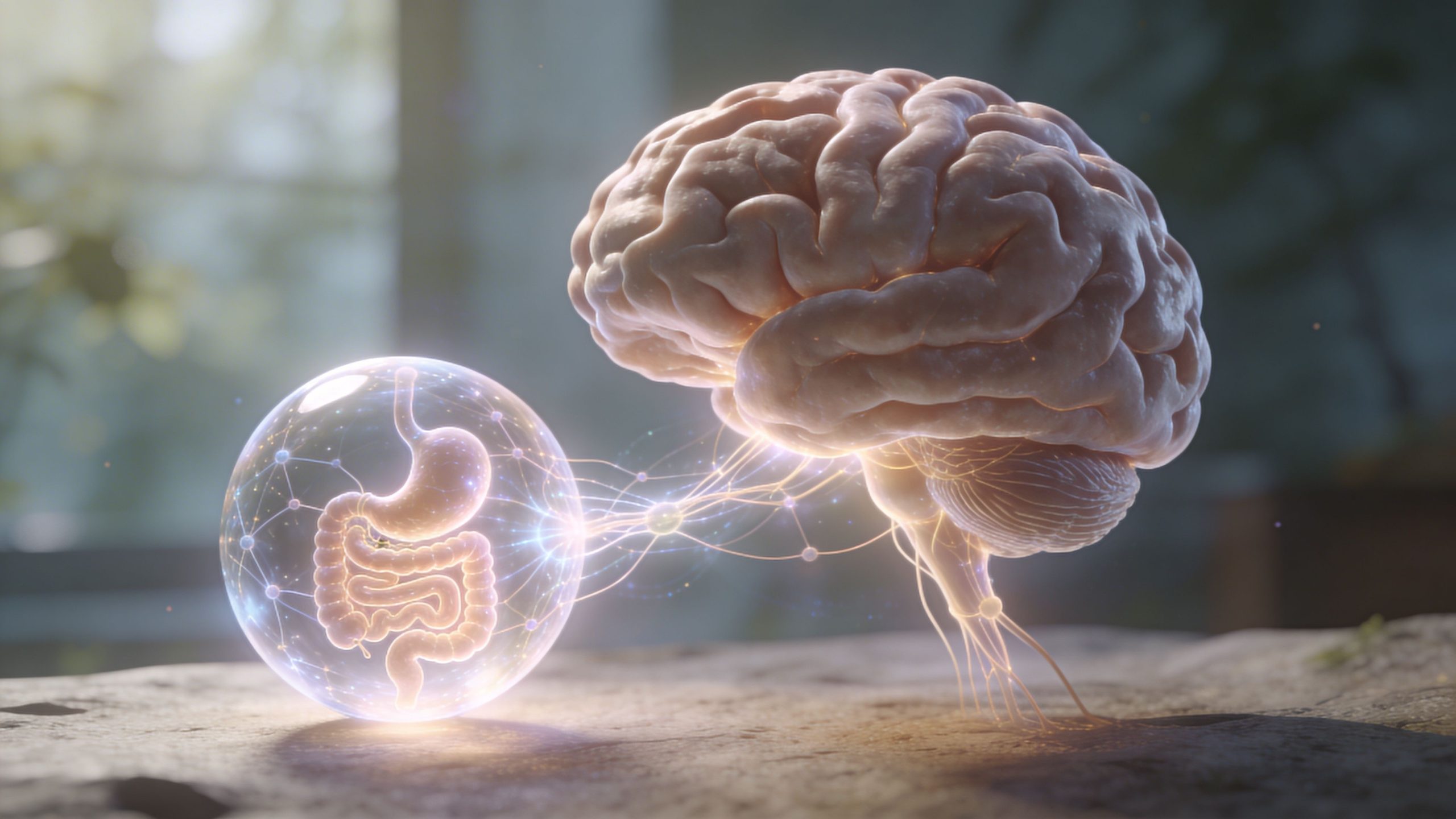
Stress changes digestion in real time
When you are anxious, rushed, overstimulated, or on edge, your nervous system shifts priorities. Digestion is no longer treated as the main task.
That can affect appetite, stomach emptying, gut sensitivity, and the sensation of nausea itself. Some patients notice they can eat comfortably on holiday but feel sick after the same meal during a pressured workday. That is not imagined. It reflects the body’s stress response.
Neurodivergence can shape eating and digestive symptoms
An often-overlooked link exists between neurodivergence and post-meal sickness. Verified data states that studies indicate a 40 to 50% comorbidity of ADHD with gastrointestinal symptoms like nausea due to dopamine dysregulation affecting vagus nerve signalling, as discussed in this gut-brain overview.
It is important because the problem may not look like a classic digestive disorder at first glance.
A person with ADHD or autism may experience:
- sensory overwhelm from smell, texture, temperature, or noise while eating
- irregular eating patterns because of hyperfocus, distraction, or missed hunger cues
- anxiety around meals after repeated unpleasant digestive experiences
- difficulty identifying internal body signals until symptoms become intense
What this can look like day to day
One patient feels fine all morning, forgets to eat, then has a large late lunch and feels shaky and nauseated. Another avoids certain textures, then relies on a narrow range of foods that may worsen reflux or fullness. Someone else becomes queasy in busy cafés because noise, smell, and social pressure make eating physically stressful.
None of that rules out digestive illness. It means the nervous system may be part of the picture.
Why this perspective helps
When clinicians miss the gut-brain piece, patients often get stuck. They are told their tests are “fine”, yet they still feel sick after meals.
A better approach asks wider questions:
- What is the eating pattern like across a normal week?
- Are symptoms worse in overstimulating settings?
- Is there a history of anxiety, ADHD traits, autism traits, or sensory sensitivity?
- Does nausea come with panic, dread, shutdown, or food avoidance?
Practical point: If your symptoms do not fit neatly into reflux, allergy, or indigestion, it is worth considering whether your nervous system and digestive system are interacting more closely than you realised.
How to Manage Nausea and Find Immediate Relief
If you feel sick after eating, a few simple measures can sometimes reduce the intensity while you work out the cause.
What to do in the moment
- Pause the meal: You do not need to force the last few bites. Stopping for a short while can prevent nausea from escalating.
- Sit upright: Staying upright can ease pressure and may reduce reflux-type symptoms.
- Sip fluids slowly: Small sips of water can be easier to tolerate than large drinks taken quickly.
- Choose gentle options: Ginger tea, peppermint tea, or plain fluids can feel soothing for some people.
- Reduce sensory triggers: Strong smells, heat, and a stuffy room can intensify nausea.
Breathing slowly can also help. Nausea often worsens when people tense up and begin breathing high in the chest.
Habits that may prevent repeat episodes
Some people benefit from changing how they eat rather than only what they eat.
Try these adjustments:
- Eat smaller meals: Less volume can be easier for the stomach to process.
- Slow the pace: Put cutlery down between bites and chew more thoroughly.
- Notice trigger foods: Repeated reactions to dairy, rich meals, spicy foods, or late meals are worth recording.
- Avoid lying flat after eating: This is especially helpful if reflux is part of the problem.
- Keep meal timing steadier: Long gaps followed by very large meals often make symptoms worse.
What not to rely on
It is tempting to keep reaching for short-term fixes and hope the problem fades. That may work for an occasional upset stomach, but repeated post-meal nausea deserves more than guesswork.
Home measures can make you more comfortable. They do not replace a proper assessment if symptoms persist, recur, or interfere with eating normally.
A simple symptom note to keep
Write down:
- What you ate
- When nausea started
- How long it lasted
- Any associated symptoms, such as bloating, burning, pain, or diarrhoea
- Context, including stress, rushed eating, or missed meals earlier in the day
That sort of pattern spotting can make a clinical consultation more productive.
Navigating Your Path to a Diagnosis and Treatment
You finish a meal, wait for your stomach to settle, and instead start wondering whether this is stress, reflux, a food reaction, or something more complex. After a while, the hardest part is often not the nausea itself. It is the uncertainty.
When symptoms keep returning, the aim is to work out the pattern. A diagnosis usually starts with a careful history, because the timing often points us in the right direction. Feeling sick within minutes of eating suggests a different set of causes from nausea that starts an hour or two later. Burning in the chest, bloating, pain, diarrhoea, weight change, and bowel habit changes all help narrow things down. So do less obvious clues, such as sensory overload, rigid food routines, anxiety around eating, or the executive function difficulties often seen with ADHD and autism.

When to stop self-diagnosing
Repeated post-meal nausea deserves proper assessment if it is becoming frequent, more intense, or restrictive enough that you are avoiding food. Self-monitoring is useful. Trying to solve it alone for too long often muddies the picture.
The internet tends to flatten very different problems into the same symptom. Reflux, gallbladder disease, coeliac disease, food allergy, functional dyspepsia, delayed stomach emptying, and gut-brain disorders can all leave you feeling sick after meals, but they do not follow the same path and they are not investigated in the same way.
What a GP usually looks for
A GP starts by sorting your symptoms into the most likely group of problems and deciding what can be treated first, what needs testing, and what needs referral.
That may include considering:
- reflux or irritation in the stomach or oesophagus
- food allergy or food hypersensitivity
- side effects from medicines or supplements
- patterns that suggest gallbladder, pancreas, or liver problems
- motility disorders, such as delayed stomach emptying
- gut-brain factors, including anxiety, sensory sensitivity, ADHD, or autism-related eating patterns
A useful analogy is traffic control. Your GP is often the first clinician directing where the investigation should go, rather than ordering every possible test at once. Some people need blood tests, stool tests, scans, or referral for endoscopy. Others benefit more from a structured review of symptoms and a short trial of treatment to see whether the pattern becomes clearer.
Tools that help the diagnostic process
One of the best things you can bring to an appointment is a record that shows what happened, when it happened, and what was happening around the meal.
If written notes are difficult to keep up with, a photo food diary app can make tracking easier by logging meals visually. That can be particularly helpful for people with ADHD, autistic people, or anyone whose symptoms are intermittent and hard to reconstruct from memory.
Who does what in the UK pathway
Different parts of the UK system answer different questions, and knowing that can make the process feel less confusing.
| Service | What it can help clarify |
|---|---|
| GP | First assessment, symptom pattern, initial treatment, blood or stool tests, and deciding whether referral is needed |
| Gastroenterologist | Reflux, ulcers, coeliac disease, delayed stomach emptying, endoscopy decisions, and more complex upper GI symptoms |
| Allergy testing service | Whether a repeated food-linked pattern fits with allergy or another hypersensitivity that needs formal assessment |
| Psychology or psychiatry input | Anxiety, food-related distress, sensory issues, avoidant eating, and neurodivergent overlap |
The appropriate specialist depends on the pattern. Nausea with hives, swelling, or a clear repeat reaction after a specific food points in a different direction from nausea with heartburn, or nausea that appears mainly in periods of overload and disrupted routine.
A reassuring next step
You do not need to work this out alone. If you have been asking why do i feel sick after eating and still do not have a clear answer, a personalised review can shorten the trial-and-error stage.
At Haven Medical, patients can access private GP appointments, consultant-led gastroenterology care, allergy testing, and assessment of wider gut-brain factors, including ADHD and autism-related concerns.
Call to book if you want help making sense of recurring post-meal nausea. Click to book if you are ready for an appointment. Visit website to learn more about consultant-led assessment and treatment options at Haven Medical.