


You might be reading this because you already do the sensible things. You attend check-ups, you try to stay informed, and you don’t want to wait for symptoms before thinking about your health. That’s a reasonable place to be. Many people ask a similar question in clinic: is there a cancer blood test that can add to the screening they already know about?
The short answer is yes, but it needs careful explanation. Blood-based cancer screening is a developing area, and it sits alongside existing NHS screening rather than replacing it. Some blood tests can flag risk. Others are designed to look for cancer-related signals more directly. The important part is understanding what each test can and can’t tell you.
Beyond Standard Screening for Early Cancer Detection
Most established screening programmes focus on one part of the body at a time. That approach has real value. It has saved lives and remains an essential part of preventative care. But it also means many people wonder whether there’s a broader way to look for risk, especially if they have a family history of cancer or want a more proactive picture of their health.
What routine blood tests can already show
Even before newer screening tools, ordinary blood work has sometimes offered early clues. In the UK, routine blood tests can help identify people who may need further cancer assessment. NICE recommends urgent investigation when blood test findings such as thrombocytosis suggest a 3% or higher probability of cancer, and NIHR evidence also found that high-normal platelet counts of 325 to 400 x 10^9/L were linked to increased cancer risk, especially in men over 60 in this NIHR review of routine blood test findings and cancer risk.
That point often surprises patients. A cancer blood test doesn’t always mean a futuristic specialist assay. Sometimes it begins with a GP noticing an unexpected pattern in a standard test and deciding it needs proper follow-up.
Practical rule: A blood test result that raises suspicion is not the same as a cancer diagnosis. It’s a reason to investigate properly.
Where multi-cancer blood tests fit
Newer tests aim to do something different. Instead of checking one organ, they look for signals in the blood that may suggest cancer is present somewhere in the body. You’ll often hear these called multi-cancer early detection tests or liquid biopsies.
That’s where the Trucheck test enters the conversation. It’s an advanced blood-based screening option designed to look for signs associated with solid tumours from a single sample. For someone who wants a wider screening view, that can sound appealing. It can also sound confusing.
The simplest way to think about it is this. Standard screening asks, “Is there evidence of cancer in this one organ?” A multi-cancer blood test asks, “Is there a signal in the bloodstream that suggests a cancer somewhere may need looking for?”
What Is the Trucheck Cancer Blood Test
The Trucheck test is a multi-cancer early detection blood test. Its purpose is to screen for cancer-related signals from a simple blood sample, often before a person has any symptoms. It is not used to confirm a diagnosis on its own.
The core aim of the Trucheck test is to look for signs that may indicate a solid tumour is present, even when nothing obvious has shown up yet.
What makes it different from ordinary blood work
Readers often confuse very different tests. A routine Complete Blood Count, or CBC, measures cells such as red blood cells, white blood cells, and platelets. That sort of test is commonly used to investigate symptoms or monitor blood disorders and blood cancers. For example, 85% of chronic lymphocytic leukaemia cases present with white blood cell counts above 100 x 10^9/L at diagnosis, according to the reference summarised in this overview of blood tests used in cancer care.
Trucheck is doing a different job. It is a screening tool for solid tumours, not a general blood count and not a blood cancer monitoring test.
What patients usually want to know first
A few points help keep it clear:
- It’s broad rather than organ-specific. The test is designed to screen for multiple cancer types in one blood sample.
- It’s intended for early detection. The goal is to look for signals before symptoms appear, not to explain obvious symptoms that already need direct investigation.
- It doesn’t replace established screening. If you’re due a mammogram, cervical screening, or bowel screening, you should still have those.
- It sits within a wider clinical decision. Whether it’s suitable depends on your age, family history, personal worries, and what action you’d be willing to take if the result was abnormal.
If you want a plain-English primer on the wider question of how cancer can be checked by blood tests, that resource gives a helpful overview of the different roles blood tests can play.
How the Trucheck Test Works The Science of Liquid Biopsy
A liquid biopsy uses a standard blood sample to look for signs that may have come from a solid tumour elsewhere in the body. Instead of removing tissue directly, the laboratory studies what is circulating in the bloodstream and asks a focused question. Are there abnormal cancer-associated cells present that deserve further investigation?
With Trucheck, the main target is circulating tumour cells, or CTCs. These are cells that may separate from a tumour and enter the blood. They are uncommon, sometimes extremely so, which is why the laboratory process has to be precise. Finding them is less like checking a routine blood count and more like searching for a very small signal in a large, busy sample.

A simple way to picture it
A useful comparison is a river carrying traces from places upstream. Blood moves through the whole body, so it can sometimes carry clues released from tissue that looks normal on the surface and causes no symptoms yet. The clue is indirect, but it can still be meaningful.
That is the basic idea behind liquid biopsy. It does not point to every detail, and it does not replace scans or tissue biopsy when those are needed. What it can do is raise an early flag that prompts a careful next step.
For readers who want a broader scientific explainer, Liquid Biopsy Based Genomic Profiling For Early Cancer Detection gives extra background on how these blood-based approaches are being used to look for cancer signals.
The process in three clear steps
Blood is taken at the clinic
A clinician collects a routine blood sample, in much the same way as for other private blood tests.A specialist laboratory analyses the sample
The sample is processed using methods designed to enrich and identify rare abnormal cells linked with solid tumours. This is very different from checking cholesterol, iron levels, or signs of infection.A report is issued for clinical interpretation
The report states whether cancer-associated signals were detected. A clinician then reviews that result alongside the person’s history, family background, current health, and any other relevant findings.
What a positive result really means
The practical point is simple. A positive Trucheck result is not a diagnosis of cancer. It means the test has found a signal that needs proper follow-up.
A screening result opens a diagnostic pathway. It doesn’t close the case.
In a responsible private clinic setting, that follow-up is as important as the blood test itself. Depending on the result and the wider clinical picture, the next step may be imaging, referral to an appropriate specialist, or further targeted investigations to look for a source.
A negative result also needs context. It can be reassuring, particularly when discussed with a clinician who understands your risk factors, but it cannot prove that cancer is absent. That balanced interpretation is one reason this test should be used as part of a structured clinical pathway, rather than as a standalone result viewed in isolation.
Who Can Benefit from This Proactive Screening Test
Not everyone needs a private cancer blood test. For some people, though, it may be a reasonable extra layer of information.
The group that usually asks about it first includes health-conscious adults who already engage well with their health. They aren’t necessarily unwell. They want to know whether they can look beyond standard screening programmes.

When the question makes sense
There’s a practical reason this area has gained attention. Standard screening doesn’t reach every cancer and it doesn’t reach every eligible person. In England, 49.3% of eligible people took part in bowel cancer screening in 2022/23, with lower participation in deprived areas, and 57% of UK cancer deaths are reported to come from cancer types with no routine screening programme in this discussion of screening gaps and multi-cancer testing.
That doesn’t prove that every person should have a private screening test. It does explain why many patients want to discuss additional options.
People who may want a conversation about it
A clinician may consider this sort of screening discussion helpful for:
- Adults thinking preventatively who want a broader view of risk alongside their regular care.
- People with a family history of cancer who feel uneasy waiting for symptoms or relying only on organ-specific screening.
- Those who want added reassurance after discussing the pros and cons carefully.
- Patients who understand the next step and would be willing to have scans or specialist review if the result suggested concern.
When it may be less useful
A screening blood test isn’t the right starting point for everyone. If you already have symptoms such as unexplained weight loss, bleeding, a persistent change in bowel habit, a lump, or ongoing pain, you usually need a direct medical assessment rather than a screening test. In that situation, the question is no longer “Should I screen?” It’s “What investigations do I need now?”
The best candidate for proactive screening is someone who is well, informed, and prepared to act sensibly on the result.
Understanding the Benefits and Limitations
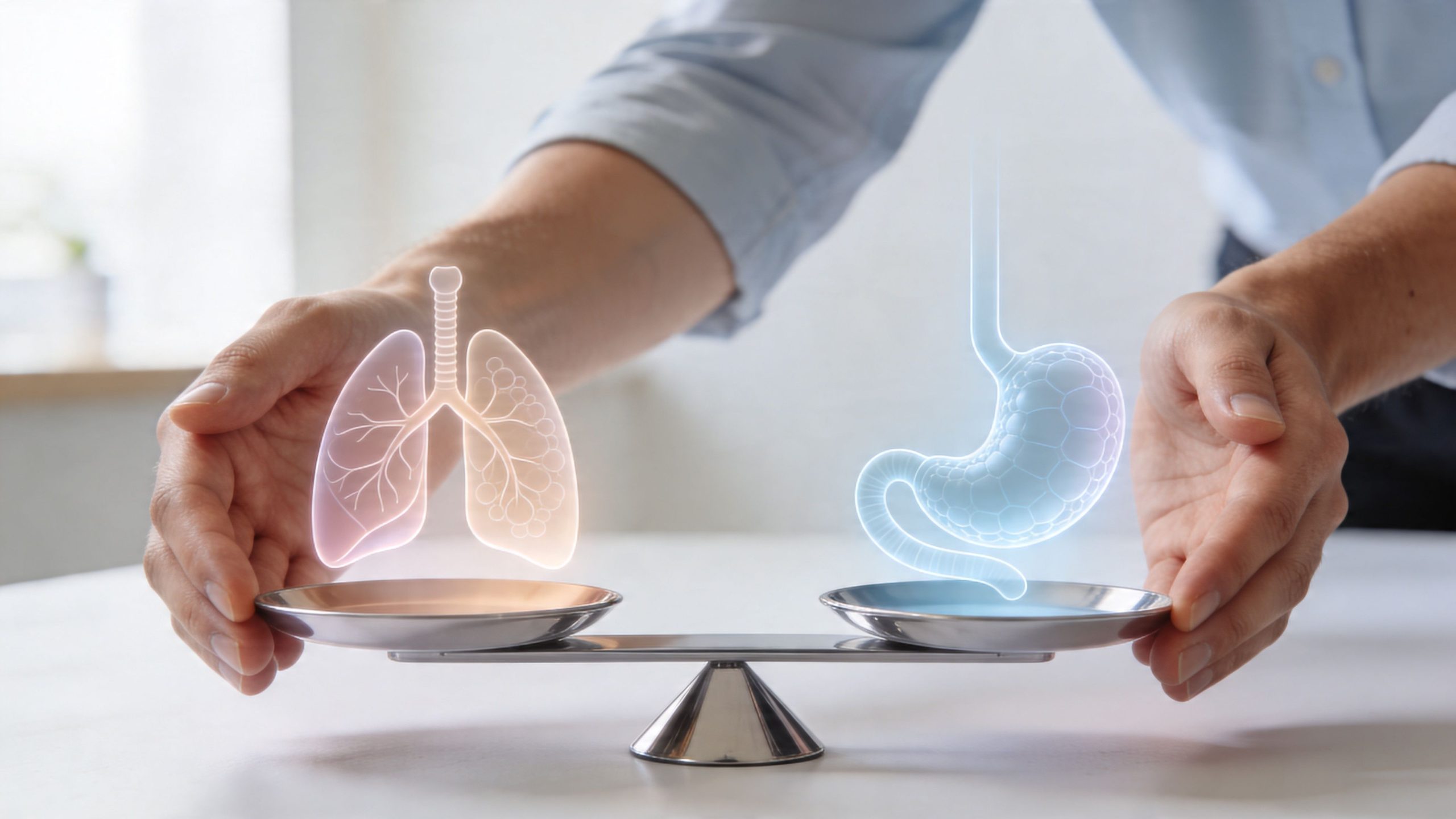
The attraction of a cancer blood test is easy to understand. It’s simple, it feels less intrusive than many traditional investigations, and it offers a wider lens than single-organ screening. But balanced advice means giving the drawbacks equal attention.
The main advantages
A blood-based screening test has obvious practical benefits:
- It’s minimally invasive. A standard blood draw is generally well-tolerated.
- It can screen for multiple cancers at once. That’s very different from tests aimed at a single organ.
- It may pick up signals before symptoms start. That is the central appeal of early detection.
- It can fit into private preventative care. For patients who want a more proactive approach, it can become part of a broader health review.
For many people, convenience matters too. A blood test is often easier to accept than an invasive procedure, and that can make some patients more willing to engage with screening.
The limitations matter just as much
No responsible clinician should present this type of test as a simple yes-or-no answer to cancer.
Here’s why:
| Consideration | What it means in practice |
|---|---|
| False positives can happen | A result may suggest a cancer signal even when no cancer is ultimately found. |
| False negatives can happen | A reassuring result doesn’t rule cancer out completely. |
| It is not diagnostic | Any abnormal finding still needs proper follow-up testing. |
| It does not replace NHS screening | You should still attend routine screening offered through established programmes. |
That last point is essential. A person shouldn’t skip a mammogram, cervical screening appointment, or bowel screening invitation because they’ve had a private cancer blood test. These tests answer different questions.
A good screening test adds information. It doesn’t give permission to ignore symptoms or avoid standard screening.
The best way to use it
The most sensible view is to treat Trucheck as one tool within a broader health strategy. It may be useful when interpreted by a clinician who knows your history, explains uncertainty clearly, and has a plan for what happens next.
That clinical context protects patients from two common mistakes. One is overreacting to a screening result. The other is placing too much confidence in a normal one.
Your Trucheck Journey with Haven Medical
You have the blood sample taken, then a few days later an email says your result is ready. For many patients, that is the moment questions begin. What does the report mean, and what should happen next?
At Haven Medical, the process is set up so the test sits inside a clinical pathway, not as a standalone purchase. That matters because a screening result is only useful if someone helps place it in context and turns it into a sensible next step.
It begins with a clinical review
The first stage is a consultation with a clinician who looks at the wider picture. That includes your personal medical history, family history, current health, and what has prompted you to ask about Trucheck now.
Sometimes the discussion confirms that the test could be reasonable to consider. Sometimes it becomes clear that another route makes more sense, such as standard screening, symptom assessment, or waiting until there is a clearer reason to test. A good consultation does not push everyone toward the same answer.
That is often reassuring in itself.
The blood test is the simple part
If you decide to go ahead, the sample is taken in the same way as an ordinary blood test. In practical terms, this is the easiest part of the process.
The more important work happens after the tube leaves the clinic. The laboratory analyses the sample, and the result then comes back for clinical review. Patients are not left to decode unfamiliar wording on their own or guess how seriously to take a finding.
The result needs interpretation, not just reading
A Trucheck report is a bit like an alert on a dashboard. It may point to a concern, or it may offer some reassurance, but it still needs a trained person to explain what signal was found, how reliable that signal may be in your case, and what action is reasonable.
If the result is negative, the conversation usually focuses on what that result can and cannot tell you. If the result is positive, the focus shifts to follow-up. The next step depends on the pattern of the result and your broader clinical picture.
If follow-up is needed
This is the part people often fear, so clarity helps. A positive screening result means there is enough concern to investigate further. It does not mean cancer has been confirmed.
The onward plan may include:
- targeted imaging to look more closely at a suspected area
- referral to an appropriate specialist
- further tests to clarify whether a genuine problem is present
A private clinic pathway can make this process more organised. The same team can explain the report, arrange the next stage, and keep the sequence clear, which reduces the risk of a worrying result turning into confusion or delay.
For a test like Trucheck, that structure is a large part of responsible use. The blood draw is only the starting point. The value comes from careful selection before testing, clear interpretation afterwards, and a practical plan if the result raises concern.
Frequently Asked Questions about the Trucheck Test
A common situation is this. Someone feels well, has no obvious symptoms, but wants to know whether an advanced cancer blood test could add useful information. The right answer usually depends less on curiosity alone and more on context, risk, and what would happen after the result.
Do I need symptoms to have the test
No. Trucheck is used as a screening test, so it is often considered by people who are otherwise well.
If you already have symptoms that worry you, a medical assessment should come first. Screening is designed to look for possible warning signals before a diagnosis is known. It is not the same as investigating symptoms such as unexplained weight loss, bleeding, a persistent lump, or ongoing pain.
Do I need to prepare in a special way
Preparation is usually similar to a routine blood test.
Your clinician will tell you if anything specific applies to you, including timing, medicines, or practical details on the day. It is better to follow the clinic’s instructions than rely on general advice online, because small details can vary between services.
Does a positive result mean I have cancer
No. A positive result means the test has detected a signal that needs proper follow-up.
It helps to view it like a smoke alarm. It can alert you to possible danger, but it does not tell you the whole story on its own. A diagnosis still depends on further assessment, which may include imaging, specialist review, or tissue sampling if appropriate.
If my result is negative, can I stop routine screening
No. A negative Trucheck result does not replace NHS screening programmes.
You should still attend cervical screening, mammograms, bowel screening, and any other checks recommended for your age and risk profile. A newer blood test can add information in some situations, but it should sit alongside established screening rather than take its place.
Is the test suitable for everyone
No. Suitability depends on your age, family history, personal risk factors, current symptoms, and what you would want to do with the result if it came back positive.
A clinical discussion should happen first. In a private UK clinic, that conversation helps decide whether the test is sensible in your case and whether you are prepared for possible next steps, including scans or specialist referral.
Is this the same as a normal full blood count
No. A full blood count measures things such as red cells, white cells, and platelets. It can help investigate many common medical problems, but it is not designed to look for circulating tumour cells.
Trucheck is different. It is a liquid biopsy screening test that looks for signals linked to solid tumours, which is why the science, the interpretation, and the follow-up pathway are different too.
Screening is most useful when the science is understood, the result is interpreted in context, and the follow-up plan is clear.
Medical disclaimer: This article is for general education and isn’t a substitute for personalised medical advice, diagnosis, or treatment. If you have symptoms or concerns about cancer, book an appointment with a qualified clinician promptly.