




Struggling with a constant runny nose, relentless sneezing, or those maddeningly itchy, watery eyes? These are the classic calling cards of hayfever and allergy symptoms, which are essentially your immune system getting its wires crossed over harmless substances. It’s a frustrating experience, but understanding what’s really going on inside your body is the first step toward finding relief that actually lasts.
What Are Hayfever and Allergy Symptoms?

When that happens, the security team sounds the alarm. This triggers a chemical cascade, releasing a flood of compounds, most notably histamine. It’s this rush of histamine that’s directly responsible for the familiar and disruptive symptoms we all associate with an allergic reaction.
Demystifying the Allergic Reaction
This overreaction isn’t a sign that your body is weak; it’s more like a faulty calibration in a very sophisticated system. The entire process unfolds in a few distinct stages:
- Exposure: First, you breathe in, touch, or eat an allergen.
- Identification: Your immune system incorrectly flags this substance as a threat.
- Response: In response, it releases histamine and other inflammatory chemicals into your bloodstream.
- Symptoms: These chemicals then cause the tell-tale inflammation in your nose, eyes, throat, and even your skin.
This chain of events is precisely why a beautiful spring day can leave you feeling utterly miserable. Your body is working overtime to fight a battle against an enemy that isn’t really there.
At Haven Medical, we find that giving our patients clarity on the ‘why’ behind their symptoms is the first step toward getting back in control. Understanding the root cause empowers you to find a solution that truly works for your life. A wide range of blood allergy tests allows accurate and detailed information about your allergy triggers.
Hayfever: A Common and Growing Concern
Hayfever, known in medical circles as seasonal allergic rhinitis, is one of the most common allergic conditions out there. It refers specifically to allergies triggered by airborne pollen from trees, grasses, and weeds. If you suffer from it, you’re certainly not alone. In the UK, hayfever affects an estimated 20% of the population—that’s around 13 million people—with symptoms typically flaring up from late March to September.
Interestingly, research shows this number has doubled since the 1980s. This is partly due to changing climate patterns, which can lead to longer and more intense pollen seasons. You can read more about these trends in a comprehensive report from the Asthma and Allergy Foundation of America.
While many people use “hayfever” and “allergies” to mean the same thing, it’s useful to know the distinction. Hayfever is seasonal and pollen-driven. Other allergies, however, can be a year-round problem, often caused by indoor triggers like mould or dust. Pinpointing your specific triggers is the key to managing your symptoms effectively.
If your symptoms are getting in the way of your daily life, it may be time to seek professional advice. You can click to book a consultation with one of our experts for an accurate diagnosis. Or, if you’d rather speak with someone directly, feel free to call to book your appointment.
Is It Hayfever or Just a Cold?
We’ve all been there. You start sneezing, your nose is running, and you just feel off. But is it the beginning of a miserable week with a cold, or is the pollen count silently waging war on your sinuses? Telling the difference is crucial because what works for one won’t do a thing for the other.
At their core, a cold and hayfever are completely different beasts. A cold is a viral infection, plain and simple. Hayfever, however, is your immune system getting its wires crossed and launching a full-blown attack on harmless airborne particles like pollen. This fundamental distinction is why their symptoms, though sometimes overlapping, have very different personalities.
Key Symptom Timelines and Differences
One of the first things to consider is the timing. How did your symptoms show up, and how long are they sticking around? A cold tends to creep up on you over a day or two. You might notice a scratchy throat first, which then slowly blossoms into a full-blown stuffy nose and cough before clearing up in about a week.
Hayfever, on the other hand, is a far more abrupt guest. Symptoms can hit you like a tonne of bricks, often just minutes after you’ve stepped outside on a high-pollen day. And they won’t leave until the pollen does, meaning you could be suffering for weeks or even months at a time. This lingering misery is a huge clue that you’re not dealing with a simple virus.
Then, there’s the itch.
That relentless, maddening itch in your eyes, nose, throat, and even on the roof of your mouth is the classic calling card of hayfever. It’s a direct result of the histamine your body releases and is almost never a feature of the common cold.
Body-Wide Symptoms Versus Localised Reactions
Think about where you feel unwell. A cold is a systemic illness—it affects your entire body. That’s why you get those tell-tale body aches, general fatigue, and sometimes even a low-grade fever. If you feel achy and drained, a virus is the most likely culprit.
In contrast, hayfever and allergy symptoms tend to stay localised to the areas the pollen touches first: your eyes, nose, and throat. While a bad bout of hayfever can definitely leave you feeling worn out (especially if a blocked nose is ruining your sleep), it won’t cause fever or body aches.
Hayfever vs Common Cold Symptom Checker
Trying to figure out what’s what can feel like a guessing game. This handy table breaks down the most common symptoms side-by-side to help you spot the difference.
| Symptom | Hayfever | Common Cold |
|---|---|---|
| Onset | Sudden | Gradual |
| Duration | Weeks or months (seasonal) | 7-10 days |
| Itchy Eyes/Nose | Common and often intense | Rare |
| Sneezing | Frequent, successive sneezes | Occasional |
| Aches & Pains | Never | Common |
| Fever | Never | Sometimes (usually low-grade) |
| Nasal Discharge | Thin, clear, and watery | Thick, can be yellowish/green |
Knowing what you’re up against means you can get the right relief, right away. For a cold, that means rest and fluids. For hayfever, it’s all about antihistamines and avoiding your pollen triggers.
Of course, if your symptoms are severe, don’t seem to improve with over-the-counter remedies, or you’re just tired of guessing, it’s always best to get a professional opinion. Our specialist-led team is here to provide a clear diagnosis and help you find a management plan that works.
UK Allergy Seasons and Common Triggers
If you’ve ever felt your hayfever and allergy symptoms follow a predictable, almost clockwork-like schedule, you’re not imagining it. A sniffly April one year might be followed by a clear run until July the next. This is all down to the UK’s distinct allergy seasons, driven by different waves of airborne pollen.
Getting to know this natural calendar is the best way to anticipate—and get ahead of—your body’s reactions. Think of the allergy year as having three main, often overlapping, acts, each with a different pollen playing the lead role in causing misery for millions.
The Three Main Pollen Seasons in the UK
The first wave of pollen arrives much earlier than most people think, often while we’re still wrapped up in our winter coats.
Tree Pollen (February – June): This season kicks off with hazel and alder, sometimes as early as February. The main offender, however, is birch pollen, which peaks from March to May and is notorious for causing quite severe hayfever before summer has even properly begun.
Grass Pollen (May – August): This is the big one. Grass pollen is the primary trigger for an estimated 95% of hayfever sufferers in the UK. It completely dominates the summer, with a huge peak in June and often a smaller, second one in July.
Weed Pollen (June – September): Just as the grass pollen season starts to fade, weed pollens like nettle, mugwort, and dock step in. They bring a final burst of symptoms that can drag on right until the first frosts of autumn.
Because these seasons blend into one another, figuring out your exact trigger can feel like guesswork. This is where keeping a simple symptom diary really pays off. If you can match when you suffer to the pollen calendar, you’ve got a powerful clue as to what’s causing it.
How Our Changing Environment Affects Allergies
If you’re convinced that allergy seasons are getting longer and more intense, you’re right. Climate change is actively rewriting the UK’s pollen calendar. Warmer temperatures mean longer growing seasons for plants, allowing them to release pollen earlier and for much longer.
This simple guide can help you tell at a glance whether you’re dealing with hayfever or just a common cold.
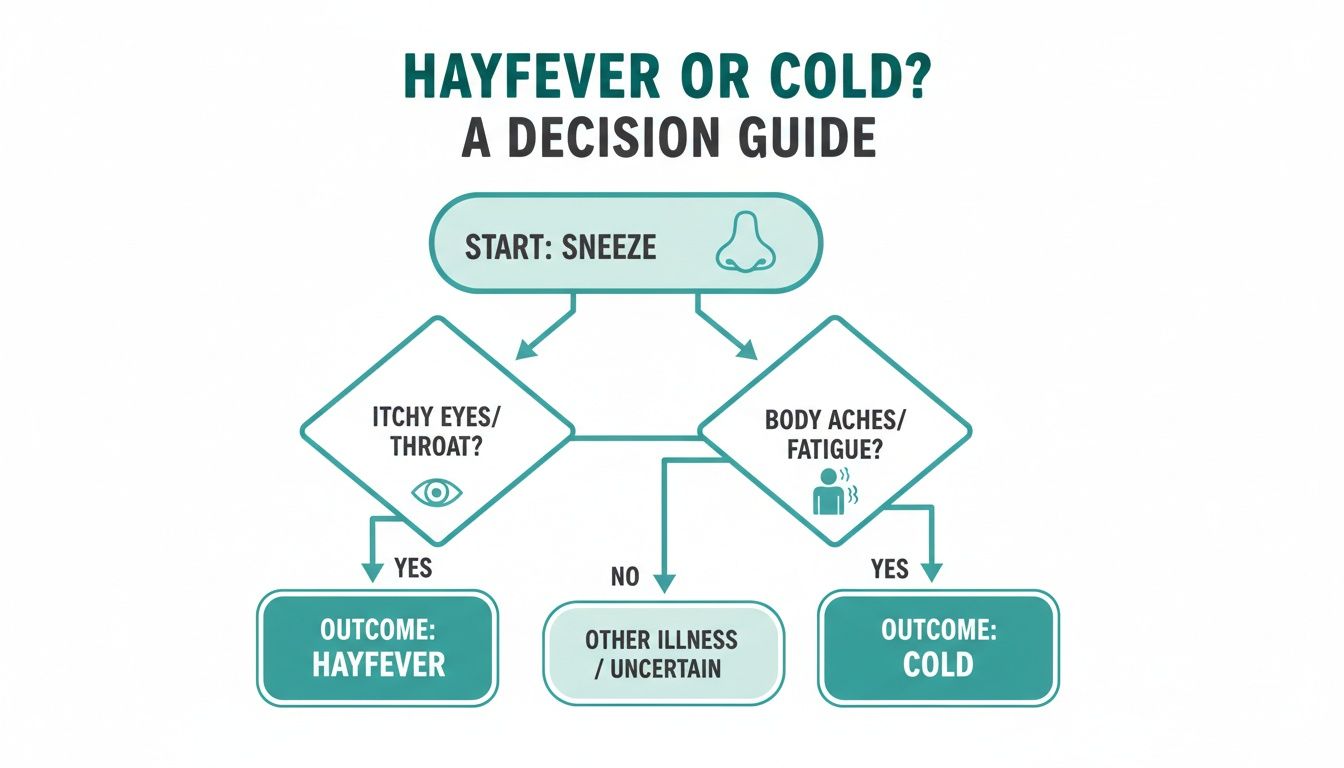
As you can see, tell-tale signs like itchy eyes point strongly towards hayfever, while body aches are a classic sign of a cold.
The shift is significant. Since 1980, the UK’s hayfever season has started, on average, 15-20 days earlier. For the 10 million people affected, this means tree pollen that once arrived in March is now a February problem. This change, linked to a 1.2°C rise in average temperature, has also fuelled a 25% increase in multi-week high-pollen episodes, particularly across the Midlands. You can read more about these climate-driven allergy trends from health data reports.
On top of this, urban pollution creates another layer of difficulty. Pollutants from traffic, like nitrogen dioxide, don’t just irritate your airways. They can actually stick to pollen grains, making them more “aggressive” and priming your body for a much stronger allergic reaction.
Beyond Pollen: Year-Round Indoor Triggers
While pollen gets most of the attention, many people find themselves battling hayfever and allergy symptoms all year long. This is usually down to indoor allergens that are perfectly happy living in our homes and offices, no matter the season.
The most common culprits hiding indoors include:
- Dust Mites: These microscopic creatures are a primary cause of year-round allergic rhinitis. They thrive in soft furnishings like your bed, carpets, and sofas.
- Pet Dander: It’s not actually pet fur that causes the sneezing and itching. The real problem is the tiny flakes of skin, saliva, and urine that cats, dogs, and other animals shed.
- Mould Spores: Mould loves damp, poorly ventilated spaces—think bathrooms, kitchens, and utility rooms. It releases tiny spores into the air, triggering persistent allergy symptoms.
Dealing with these indoor triggers is every bit as important as navigating the pollen seasons. If your symptoms seem to stick around endlessly, it might be time to look more closely at what’s going on inside your home.
The Hidden Impact of Allergies on Your Life
When you’re dealing with hayfever, it’s easy to think the battle is just about sneezing, itchy eyes, and a runny nose. But the truth is, the constant fight your body is waging has a much wider, often unrecognised, impact on your life, affecting everything from your performance at work to your ability to get a decent night’s sleep.
Many people who suffer from persistent allergies describe a frustrating mental haze, sometimes called ‘allergy brain fog’. This isn’t just about feeling a bit tired; it’s a real cognitive slump that can sabotage your concentration, slow your thinking, and make even simple tasks feel monumental. When your immune system is in a state of constant, low-grade inflammation, it’s hardly surprising that your brain feels the strain.
The Domino Effect of Poor Sleep
If you’ve ever spent a night tossing and turning because you can’t breathe through your nose, you already know one of hayfever’s most disruptive secrets: it ruins your sleep. Chronic nasal congestion, a hallmark symptom, often leads to snoring, waking up multiple times, and feeling restless. This isn’t just an annoyance; it’s a significant drain on your well-being.
Poor sleep quality creates a direct knock-on effect, contributing to:
- Daytime Fatigue: Feeling completely drained, even if you were in bed for eight hours.
- Irritability: A lack of restorative sleep can easily shorten your temper and leave you feeling on edge.
- Reduced Productivity: Without proper rest, your focus and efficiency at work or school will inevitably suffer.
Imagine trying to nail an important presentation or sit a crucial exam while battling a blocked nose and the sheer exhaustion that follows a sleepless night. The stress of just managing your symptoms can become as draining as the symptoms themselves.
The Wider Economic and Social Costs
This isn’t just a personal struggle; it’s a major issue on a national scale. The constant fight against allergy symptoms leads to very real losses in productivity and puts an extra burden on our healthcare services. For children and students, the timing can be particularly damaging during critical exam periods.
Statistics from the British Society for Allergy and Clinical Immunology reveal that hay fever symptoms cost the UK economy over £2.5 billion annually in healthcare and lost productivity as of 2026. Furthermore, 25% of allergy sufferers report moderate to severe impacts on their daily activities, highlighting just how disruptive these conditions can be. Read more about these findings on allergy impacts.
This data simply confirms what millions of us already know: hayfever is far more than a minor seasonal sniffle. The challenge is just as real for schoolchildren, with 18% of secondary pupils reporting that their symptoms interfere with their concentration during exams. It’s clear that unmanaged allergies can have a lasting effect on academic outcomes.
Reclaiming Your Energy and Focus
Simply acknowledging these hidden impacts is the first step toward taking back control. It validates the very real frustration you feel and confirms you aren’t just “being sensitive.” Managing your allergies proactively is about so much more than stopping a sneeze; it’s about reclaiming your energy, your focus, and your overall quality of life.
Of course, pollen isn’t the only trigger. Many people also contend with indoor allergens all year round. Learning effective strategies for getting rid of indoor allergens can make a huge difference in finding consistent relief.
If you feel your symptoms are holding you back at work, disrupting your sleep, or just making you miserable, please know that you are not alone and that effective support is available. It’s time to move beyond just coping and start living fully again. You can click to book an appointment with one of our specialists, or if you prefer, please call to book your consultation today.
Knowing When to Seek Professional Allergy Help
Have you tried every over-the-counter remedy on the chemist’s shelf, only to find your hayfever and allergy symptoms come roaring back? While self-care is a sensible first step, there often comes a point where it just isn’t enough. Knowing when to move beyond self-management and seek professional medical advice is the key to finally getting long-term relief.
So many people simply soldier on for years, thinking their runny nose, itchy eyes, and constant sneezing are just something they have to put up with. But if your allergies are starting to get in the way of your daily life, that’s a clear signal you need more support. This is where a consultant-led team can make a real difference.
Recognising the Signs You Need More Help
It’s rarely one single bad day but rather a slow, frustrating build-up that tells you it’s time for a specialist. If any of the following situations sound familiar, you’d almost certainly benefit from professional guidance.
Look out for these key indicators:
- Symptoms are disrupting your life: Is a blocked nose ruining your sleep? Is that familiar ‘allergy brain fog’ making it hard to concentrate at work or school? When symptoms consistently get in the way of your quality of life, it’s time for a new plan.
- Over-the-counter treatments aren’t working: If you find that standard antihistamines or nasal sprays no longer give you decent relief, or you’re having to use them constantly just to get by, it’s a sign your allergies may be too severe for basic remedies.
- You’re suffering from frequent complications: Persistent allergies can unfortunately lead to other health issues. If you’re getting recurring sinus infections, ear problems, or a nagging cough, it’s often a sign that the underlying inflammation isn’t being properly controlled.
A specialist won’t just hand you a stronger prescription; they work with you to understand the complete picture. It’s about pinpointing your exact triggers and creating a personalised management plan that goes far beyond just masking symptoms.
The Benefits of Consultant-Led Allergy Care
Seeing an allergy specialist, like an Ear, Nose, and Throat (ENT) consultant, gives you access to a level of care and diagnostic tools that simply aren’t available over the counter. This is about being strategic and taking a long-term view of your health, not just firefighting symptoms as they appear.
Moving to specialist care provides:
- An Accurate Diagnosis: Through a detailed discussion and specific allergy testing, a consultant can identify precisely which pollens, dust mites, or other allergens are causing your immune system to overreact. No more guesswork.
- A Personalised Treatment Plan: Your plan will be built around your specific triggers, lifestyle, and how severe your symptoms are. This could include advanced prescription medications or even long-term solutions like immunotherapy (desensitisation).
- Management of Complications: Specialists are trained to diagnose and treat related conditions like chronic sinusitis or Eustachian tube dysfunction, which often go hand-in-hand with severe allergies.
Ultimately, seeking professional help means you can stop guessing and start getting definitive answers. It’s the most effective step you can take to finally get your hayfever and allergy symptoms under control, allowing you to reclaim your energy and focus.
Modern Allergy Testing and Treatment Options

Thankfully, we now have simple, powerful diagnostic tools to do just that. A specialist clinic can help you create a proactive health strategy by pinpointing your specific triggers with a high degree of accuracy.
Pinpointing Your Triggers With Allergy Testing
The journey to a personalised treatment plan always begins with a detailed conversation about your symptoms and history. From there, a consultant can recommend the right tests to get a clear, evidence-based picture of what’s really going on inside your body.
Blood Allergy Tests:
- Specific IgE Blood Tests: A blood test for allergies gives detailed, accurate information about your trigger, without risk of a serious reaction. The sample is analysed in a lab to measure the amount of specific Immunoglobulin E (IgE) antibodies in your blood. Since your immune system makes these antibodies to fight off specific allergens, high levels linked to something like birch pollen are a sure sign of an allergy. Blood allergy tests allow for multiple allergens to be tested for at once, and give an indication of the severity of your reaction.
These tests are crucial. They stop the guesswork and allow us to treat the root cause. Knowing whether your misery stems from grass pollen, dust mites, or a mix of triggers is the key to unlocking an effective, targeted treatment plan.
Moving Beyond Standard Antihistamines
Once your triggers are confirmed, we can build a treatment plan that goes far beyond a daily antihistamine. While tablets are helpful for mild symptoms, a more robust approach often involves prescription-strength options and therapies designed for more complete control.
Of course, managing your environment can make a huge difference. Simple changes and investing in tools like the best air purifiers for allergies can certainly help. For moderate to severe symptoms, though, medical treatments are the cornerstone of feeling better.
Here are some of the most effective treatment pathways:
- Prescription Nasal Sprays: Corticosteroid nasal sprays are one of the best ways to control the underlying inflammation that causes congestion, sneezing, and a runny nose. Used consistently, they can make a dramatic difference to your daily life.
- Immunotherapy (Desensitisation): This is the only treatment that actually retrains your immune system instead of just suppressing symptoms. By exposing your body to gradually increasing doses of your specific allergen over several years (either with injections or under-the-tongue drops), we can help your immune system build up tolerance. The goal is to significantly reduce, or even stop, your allergic reactions for good.
Finding the right path forward starts with an expert consultation. If you’re ready to take back control from your hayfever and allergy symptoms, it’s time for a full evaluation with one of our specialists.
Your Hayfever Questions, Answered
If you’re struggling with hayfever and allergy symptoms, you’re bound to have questions. It can feel confusing, but you’re not alone. Let’s clear up some of the most common things people ask our specialists.
Can I Suddenly Develop Hayfever as an Adult?
Yes, absolutely. It’s a surprisingly common experience to suddenly start getting hayfever in your 20s, 30s, or even later.
This is often called adult-onset allergy, and it can happen for a few reasons. You might have moved to a new part of the country with different types of pollen, or your immune system may have naturally changed as you’ve got older. Sometimes, even increased exposure to pollution can be the trigger.
Are Non-Drowsy Antihistamines Really Non-Drowsy?
For most people, they are. Modern, second-generation antihistamines were designed to be much better at this than the older versions. They don’t cross into the brain as easily, which is why they cause significantly less drowsiness.
However, everyone reacts differently. A small number of people might still feel a bit sleepy or find their concentration isn’t quite what it should be. If that’s you, it’s always best to have a chat with your GP or an allergy specialist about trying a different option.
When conducted by a specialist, modern allergy tests are highly accurate and reliable. An accurate test result is the essential first step in building a personalised and effective treatment plan that works for you.
How Accurate Is Professional Allergy Testing?
Proper allergy testing, done by a professional, is a very precise science. It’s the difference between guessing what’s causing your misery and knowing for sure.
Skin prick tests, for example, can give you clear, fast results for environmental triggers like pollen, often in just 20 minutes. Specific IgE blood tests are another highly accurate tool we use to pinpoint your specific triggers. This accuracy is what allows a specialist to create a targeted management plan that actually works.
A wider range of allergy tests are available at Haven Medical, including the ALEX3 – which tests for over 300 allergens.