




You're probably reading this after a practical conversation at home. Your family may already feel complete, or you may know you don't want children in the future. At that point, searching for a private vasectomy near me stops being a vague internet query and becomes a decision about speed, privacy, convenience, and whether you'll feel properly looked after from first consultation to final semen clearance.
That's where private care can help, but only if you understand the whole pathway. The operation itself is only one part of the process. Choosing the right clinic, asking the right questions, planning recovery, and completing follow-up testing all matter just as much.
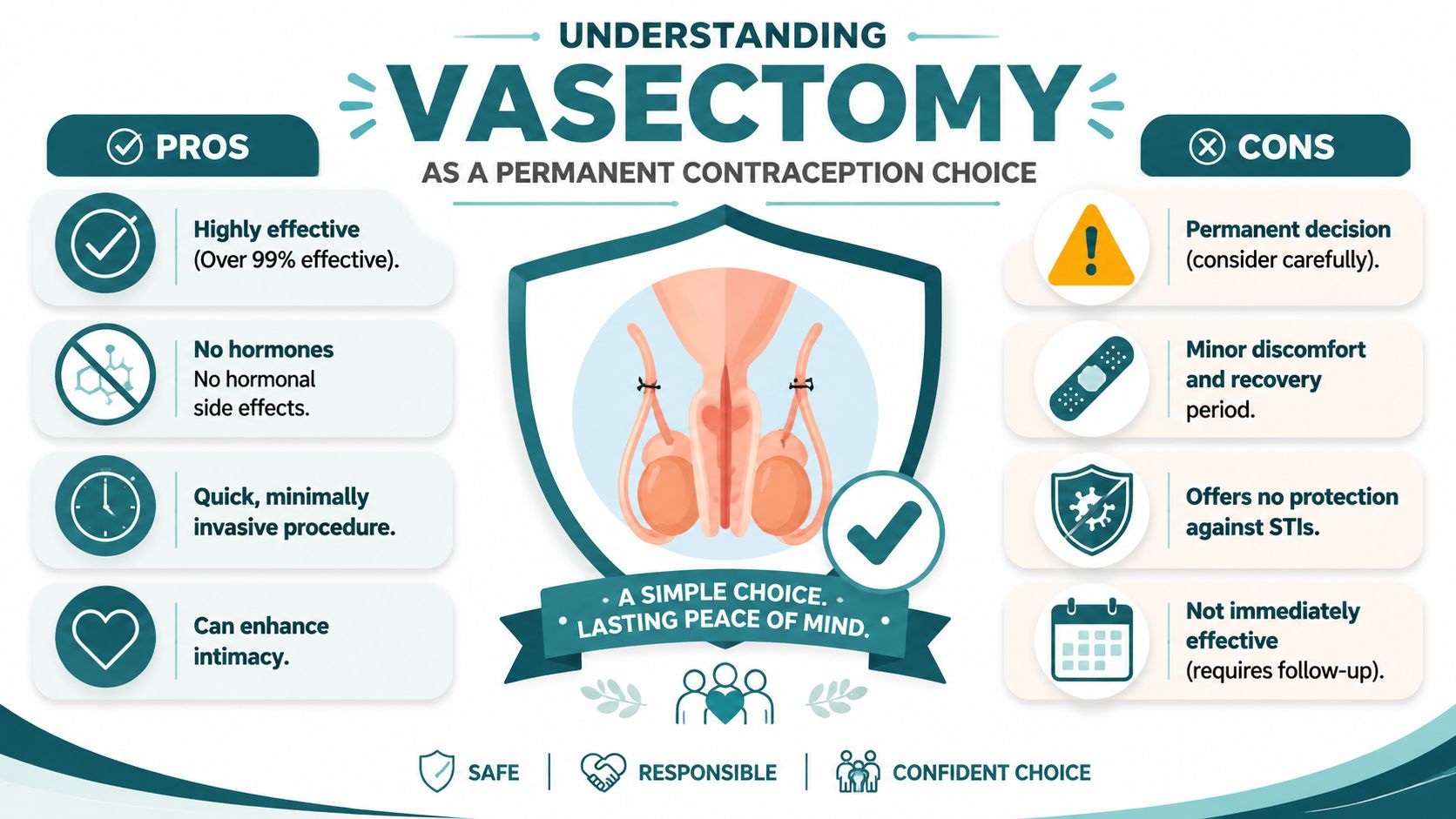
Understanding Vasectomy as a Permanent Contraception Choice
A vasectomy is a procedure that blocks the tubes that carry sperm. It's a form of permanent contraception for men. The body still makes sperm, but sperm no longer travel into the semen in the usual way.
That sounds straightforward, but the decision behind it shouldn't be casual. A vasectomy works best for men who feel settled in their long-term plans, whether that means having completed their family or deciding they don't want children at all. If there's serious doubt, it's better to pause than to book quickly and think later.
Why permanence matters
Many people ask about reversal before they ask about the procedure itself. That's understandable, but it can lead to the wrong mindset. The safest way to approach vasectomy is to treat it as final, not as something that can be undone later if life changes.
UK patient information also stresses this point. Vasectomy should be treated as permanent, and counselling should cover the practical limits of reversal and the need for continued contraception until semen testing confirms no sperm, as outlined in this vasectomy guidance on permanence and follow-up.
Practical rule: Book a vasectomy because you want a permanent method now, not because you hope reversal might rescue the decision later.
What vasectomy does and does not do
A good consultation should make the trade-offs clear:
- It prevents pregnancy permanently: That's the main benefit for men who want a long-term contraceptive decision.
- It doesn't protect against sexually transmitted infections: Condoms may still matter depending on your circumstances.
- It doesn't create instant sterility: The operation and confirmed clearance are not the same thing.
- It doesn't suit uncertainty: If your relationship, family plans, or feelings about future children are unsettled, postponing can be the wiser choice.
In practice, the men happiest with their decision are usually the ones who were already mentally certain before they started searching for a local provider.
No-Scalpel vs Conventional Vasectomy Procedures
Most patients don't need a technical lecture. They want to know what the surgeon does, how it feels afterwards, and whether one method is clearly preferable. In private practice, the conversation usually comes down to conventional vasectomy versus no-scalpel vasectomy.
Both aim to achieve the same outcome. The difference lies in how the vas deferens is reached and handled during the procedure.
Comparing Vasectomy Techniques
| Feature | Conventional Vasectomy | No-Scalpel Vasectomy (NSV) |
|---|---|---|
| Access to the vas deferens | Usually through small incisions in the scrotal skin | Usually through a tiny puncture opening |
| Skin closure | May involve stitches depending on technique | Often needs little or no stitching |
| Scarring | Small scar lines can occur | Usually less visible skin marking |
| Early soreness | Often mild, but can feel more tender where cuts were made | Often perceived as less disruptive to the skin |
| Patient impression | Familiar, established surgical approach | Often preferred by patients seeking a less invasive option |
| Discussion point to raise | Ask about stitches, wound care, and scar expectations | Ask whether you're suitable for NSV and how aftercare differs |
What patients usually notice
The main patient-facing difference is the way the skin is opened. With a conventional approach, there are small incisions. With no-scalpel vasectomy, the surgeon usually uses a small puncture-style opening instead. That often appeals to men who want the least invasive route available.
In real terms, most men focus on three things:
- The feel of the procedure: Both are normally done under local anaesthetic, so the priority is comfort and calm technique.
- The look afterwards: Men often prefer NSV because there may be less visible skin disruption.
- The recovery routine: Smaller skin openings can make aftercare feel simpler, though recovery advice still matters either way.
What actually works well
When choosing between methods, don’t get too fixed on marketing language. What matters more is whether the surgeon performs the technique regularly, explains it clearly, and has a structured follow-up plan. A beautifully branded “no-scalpel” service is less reassuring than a straightforward clinic that gives clear instructions, checks suitability properly, and tells you exactly what happens after the procedure.
The best technique is usually the one your surgeon performs confidently, explains honestly, and supports with reliable aftercare.
For most patients, no-scalpel vasectomy is attractive because it sounds gentler and often is gentler on the skin. But the right question isn’t only “which method is modern?” It’s “which method is appropriate for me, and how will this clinic manage the full process?”
Your Private Vasectomy Journey Step by Step
Once you’ve decided to explore private treatment, the process becomes much easier when you think of it as a sequence rather than a single booking. A good clinic should make each stage predictable.
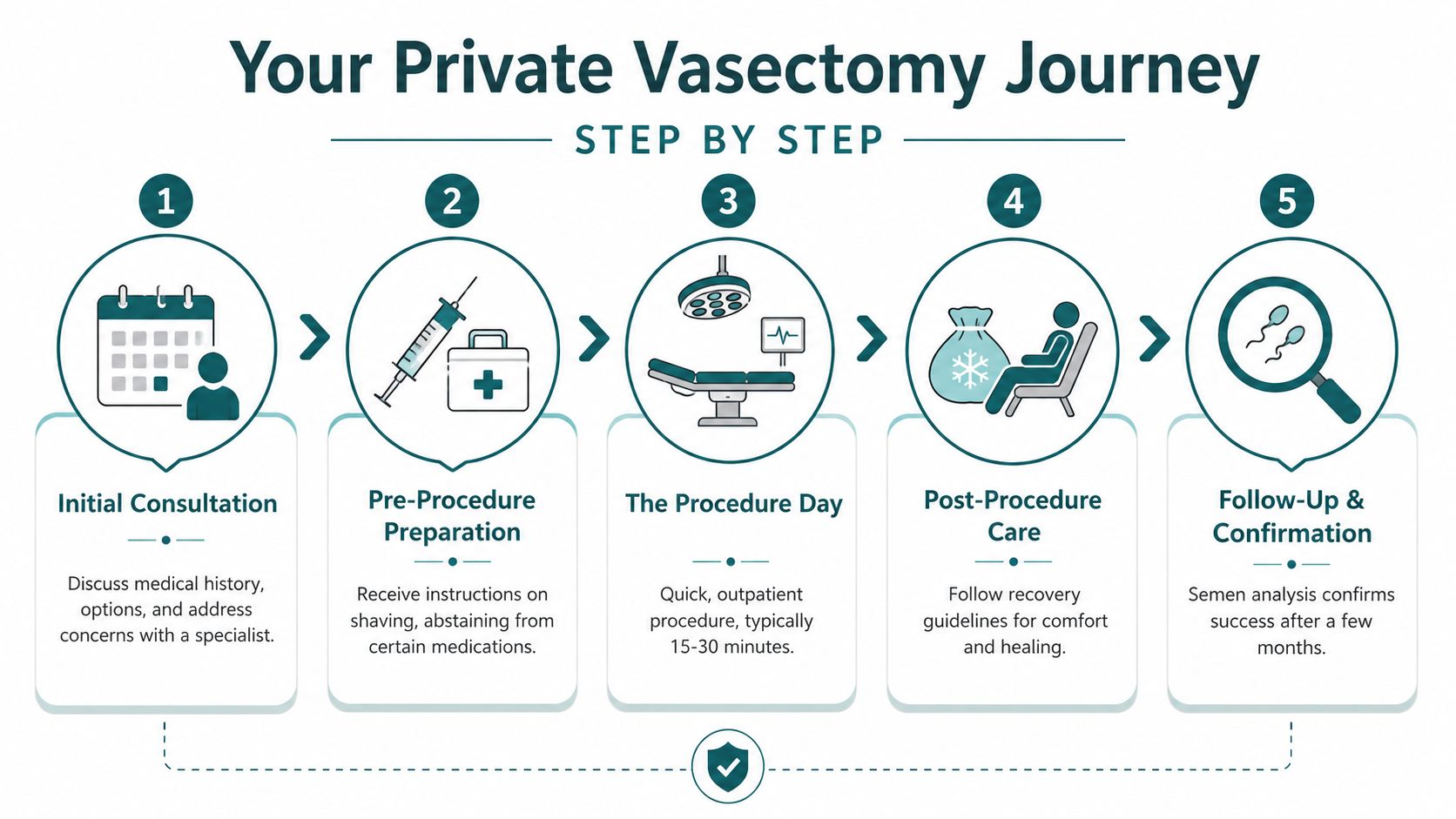
Step 1 to Step 3
Initial enquiry
You contact the clinic, usually because you want a clear appointment pathway rather than an open-ended wait. This is the point to ask what’s included, who performs the procedure, and whether semen analysis and follow-up are part of the package.Consultation
The consultation should cover your medical history, current medications, previous surgery, family circumstances, and whether you understand the procedure as permanent. It should also be the point where you ask practical questions, such as time off work, driving, exercise, wound care, and what happens if you have concerns afterwards.Procedure day
In the UK, vasectomy is typically an outpatient procedure under local anaesthetic, and the key clinical point is that sterility is not immediate. Patients must continue contraception until post-vasectomy semen testing confirms azoospermia, because sperm can remain in the reproductive tract for weeks and effectiveness is confirmed by semen analysis rather than the operation alone, as explained in this overview of vasectomy follow-up and semen testing.
Step 4 and Step 5
Private care tends to feel smoother when the clinic has already planned the later stages before you even arrive for surgery.
- Immediate aftercare: You should leave with written recovery instructions, advice on support garments, pain relief guidance, and contact details for concerns.
- Semen testing: This isn’t an optional extra. It’s the point at which the procedure is confirmed as successful.
- Final clearance: Until the clinic confirms the result, you still need contraception.
A well-run service should feel joined up from start to finish. For example, Haven Medical offers vasectomy procedures through its day surgery setting and provides pre-procedure and post-procedure instructions, including semen sample follow-up. That kind of continuity matters more than a fast booking slot on its own.
Questions to ask before you commit
Before you click to book, ask these directly:
- Who performs the vasectomy: Consultant, GP with special interest, or another clinician?
- What is included: Consultation, procedure, aftercare, semen analysis, and any review appointment.
- How do I contact someone afterwards: You want a clear route for advice if recovery doesn’t feel routine.
- What is the expected timeline: Not only for surgery, but for testing and final confirmation.
If you’re ready to move forward, call to book only once those answers are clear. If they’re vague, keep looking. A private vasectomy should feel organised from the first phone call to final clearance.
What to Expect During Recovery and Aftercare
Recovery is usually manageable, but the first few days go better when you plan for them properly. Most problems after vasectomy come from doing too much too soon, wearing poor support, or assuming you can ignore the aftercare sheet because the procedure was quick.

The first few days
Expect some tenderness, bruising, and a dragging sensation. That doesn’t usually mean anything has gone wrong. Supportive underwear, rest, and sensible pain relief are often enough to keep things comfortable.
The men who recover most smoothly usually do three simple things:
- Rest early: Don’t treat the day of surgery like a normal day with one small interruption.
- Use support: Snug underwear or scrotal support reduces movement and often improves comfort.
- Keep activity light: Avoid the temptation to “test” recovery by walking too far or lifting too soon.
If recovery feels worse at the end of a busy day, activity was probably the problem, not the procedure itself.
Returning to normal routine
Desk-based work is often easier to resume than physically demanding work. If your job involves lifting, long periods on your feet, driving all day, or manual labour, it’s wise to be more cautious.
Keep your expectations practical:
- Work: Plan around the type of work you do, not an ideal schedule.
- Exercise: Gentle movement is different from gym sessions, running, cycling, or contact sport.
- Sex: Wait until discomfort has settled and you feel comfortable. Even then, remember that comfort and contraceptive clearance are separate issues.
When to ask for help
Most aftercare is straightforward, but you should contact the clinic if pain seems to be escalating rather than settling, swelling becomes more marked, the wound area looks increasingly inflamed, or you develop symptoms that worry you. A private clinic should make this easy. You shouldn’t be left guessing whether what you’re experiencing is normal.
This is also where clinic quality shows. Good aftercare isn’t only about an instruction leaflet. It’s about having someone available to answer a sensible question without making you feel you’re overreacting.
Costs and Choosing the Right Private Clinic
The first price you see online rarely tells the full story. Those looking for a private vasectomy near me often compare procedure fees only. That’s understandable, but it can be misleading. The better question is what the fee covers and whether the clinic manages the whole pathway well.
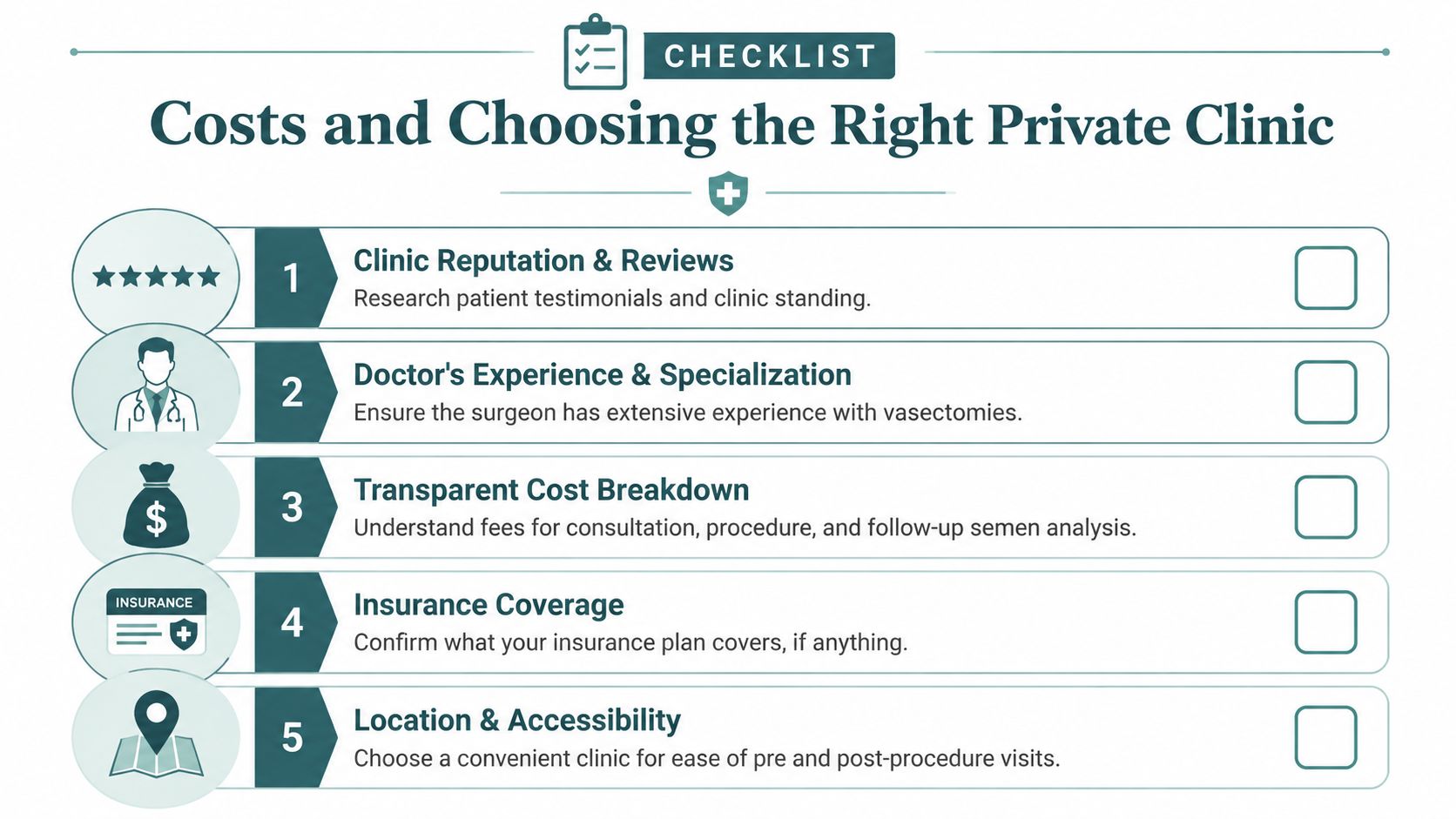
What you should expect a package to include
A proper private package may include several parts, not just the operation itself:
- Consultation: Decision-making, consent, medical review, and suitability assessment.
- Procedure: The vasectomy itself, usually in an outpatient setting.
- Aftercare: Written guidance plus a route for post-procedure concerns.
- Semen analysis: Essential for confirming that the vasectomy has achieved the intended result.
- Follow-up contact: A way to communicate the result and next steps clearly.
If a quote looks cheap, ask whether semen testing is included. If it isn’t, the headline price may not reflect the true cost of getting from consultation to confirmed clearance.
Why private care can make sense
One of the practical reasons men choose private treatment is continuity. NHS access can depend on GP referral pathways and local availability, and a wider unanswered question is whether private care is faster end to end, including consultation, procedure, semen analysis, and follow-up, as discussed in this review of private vasectomy access and continuity of care.
That matters because speed on its own isn’t enough. A clinic that offers a quick operation date but leaves you chasing test results later isn’t offering a smoother journey. A good private service should reduce friction at every step.
Choose the clinic that explains the entire pathway clearly, not the one that only advertises the lowest procedure fee.
A practical checklist for choosing well
Use this shortlist when comparing local providers:
- Regulation and governance: Check that the clinic is properly registered and transparent about who delivers care.
- Consultant-led care: Ask whether a consultant urologist performs the procedure and handles the consultation.
- Clarity on technique: The clinic should explain whether it offers conventional or no-scalpel vasectomy, and why.
- Transparent pricing: You should know exactly what is included before you commit.
- Accessible aftercare: There should be a named route for questions after the procedure.
- Location: Convenience matters because you may need more than one point of contact across the full journey.
The right clinic is rarely the flashiest. It’s the one that gives you confidence before, during, and after the procedure. Once you find that, visit website pages carefully, then call to book if the service looks complete rather than just convenient.
Answering Your Private Vasectomy Questions
Many men are comfortable with the idea of vasectomy but still have a handful of very practical questions. Those questions matter. Straight answers usually make the decision feel much easier.
Is the procedure painful?
Most men describe the procedure as uncomfortable rather than very painful. The local anaesthetic is there to make the operation itself tolerable. Afterwards, soreness and tenderness are more relevant than sharp pain.
How long does the surgery take?
The appointment is usually much longer than the actual procedure because check-in, preparation, consent confirmation, and recovery all take time. The practical point is to treat it as a planned medical appointment, not something to squeeze into a lunch break.
Can I drive myself home afterwards?
Many clinics advise arranging transport home. Even if you feel capable, it’s usually more sensible to have someone else drive, especially if you feel sore, tense, or tired afterwards. Ask your clinic for its exact policy before the day.
When is it safe to have sex again?
When soreness has settled and you feel comfortable, sexual activity can usually resume. But comfort is only one issue. You still need contraception until the clinic has confirmed clearance through semen testing.
Does a vasectomy affect sex drive or erections?
A vasectomy is about sperm transport, not testosterone, desire, or erectile function. If a patient worries about masculinity, sexual performance, or libido, that should be discussed openly in consultation, because those fears are common and better handled directly than left unspoken.
How common is vasectomy in the UK?
Vasectomy is established, but it isn’t among the most commonly used contraceptive methods. In England and Wales, 2.9% of men aged 16 to 49 reported male sterilisation or vasectomy, while 6.8% of women aged 16 to 49 reported female sterilisation as their current method in the ONS data referenced here through the published contraception figures. Usage varies by age and family status, and it’s more common among people who’ve completed childbearing.
What makes private care different in practice?
The difference is usually the experience around the procedure. Patients often want faster access, clearer communication, more predictable scheduling, and one clinic taking responsibility for the full process. That’s often what they’re really asking when they search for a private option nearby.
What if I’m not completely sure?
Then wait. That’s the correct answer. A vasectomy suits certainty far better than hesitation.
If you’re at the stage where you want clear answers specific to your circumstances, the next step is simple. Call to book a consultation, or click to book if the clinic offers online appointments. If you’re still comparing options, visit website pages with a critical eye and look for complete pathway details, not just a procedure headline. A well-run private vasectomy service should make you feel informed before you ever step into the clinic.