



You may be reading this because you’ve found a mole that seems darker than you remember, a skin tag that keeps catching on clothing, or a little lump that’s probably harmless but won’t stop occupying your mind. That reaction is very common. Individuals don’t often worry about the phrase “skin lesion” until it suddenly applies to them.
The good news is that most skin lesions are not dangerous. The more important question is whether the lesion is annoying, cosmetically bothersome, or something that needs proper medical assessment. If you understand that decision point, the rest becomes much less intimidating.
Understanding Common Skin Lesions
“Skin lesion” sounds more alarming than it needs to. In plain English, it means an area of skin that looks or behaves differently from the skin around it. That could be flat or raised, pigmented or skin-coloured, soft or firm.
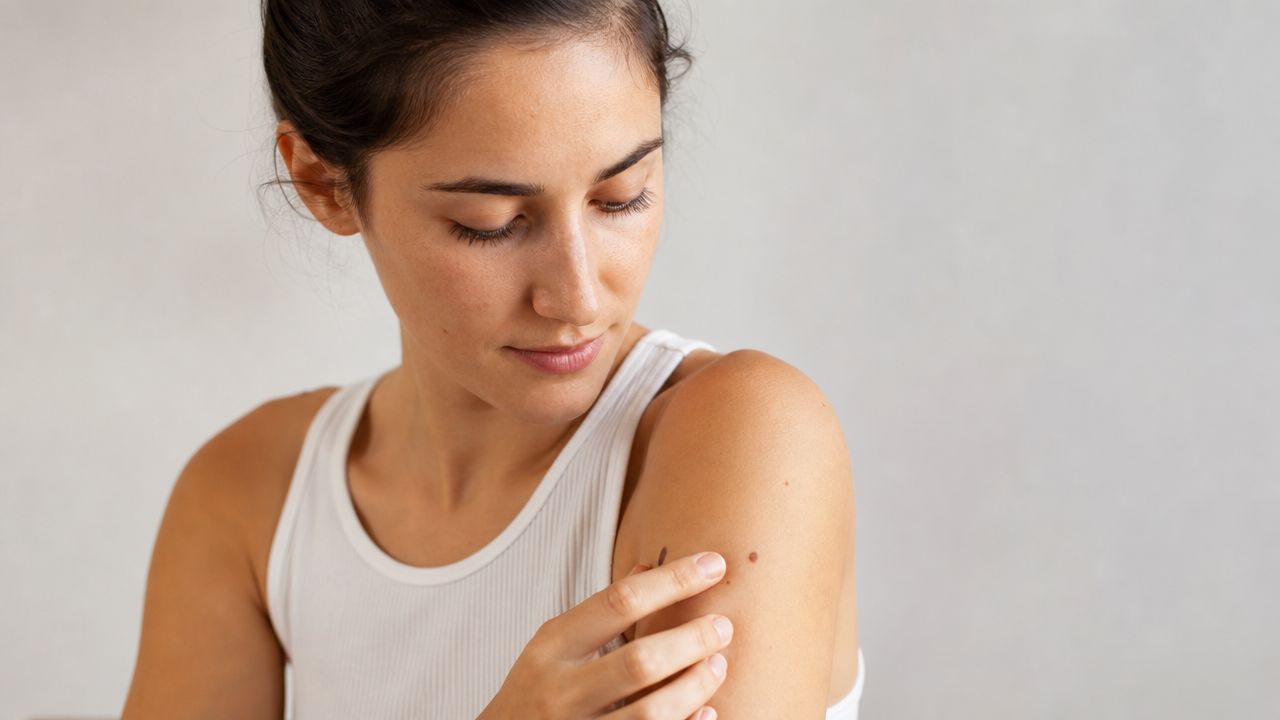
The common types people notice
Many lesions fall into the “bumps and spots” category that GPs and dermatology clinicians see every day.
- Moles are collections of pigment-producing cells. They may be flat or raised, and many are completely stable for years.
- Skin tags are soft, small growths that often appear where skin rubs, such as the neck, underarms, or groin.
- Cysts are lumps under the skin. They can feel smooth and rounded, and sometimes become inflamed or uncomfortable.
- Warts are roughened growths caused by a viral infection in the skin.
- Seborrhoeic keratoses often look waxy, slightly stuck-on, or uneven in texture and are usually benign.
A useful way to think about lesions is this. Your skin is normally made of cells growing in an orderly pattern. A lesion is an area where that pattern has changed a bit. Sometimes it produces extra pigment. Sometimes it forms a little flap or lump. Sometimes it thickens.
Why the term causes confusion
People often assume “lesion” means cancer. It doesn’t. Doctors use the word broadly. A harmless skin tag and a suspicious mole can both be called lesions.
Most lesions seen in general practice are benign, but “benign” doesn’t mean “ignore forever.” It means the next step depends on symptoms, change, and clinical appearance.
What matters more than the label
When I assess someone in clinic, I’m less interested in the name they’ve guessed online and more interested in a few practical questions:
- Has it changed in colour, shape, size, or texture?
- Is it causing symptoms such as pain, bleeding, catching, irritation, or discharge?
- Where is it located and does that affect function, shaving, clothing, or confidence?
- Does it need a diagnosis, or is it clearly harmless on examination?
That’s the starting point for the removal of skin lesions. Not “What’s the perfect treatment?” but “Does this need removing at all?”
When Is Removal Medically Necessary
A lot of benign lesions are removed because they bother the patient visually or because they create anxiety. In UK practice, that distinction matters. UK guidance states that benign skin lesion removal should generally not be commissioned unless there is bleeding, pain, diagnostic uncertainty, or concern about malignancy, as discussed in NHS England evidence-based guidance on benign skin lesion removal.
When monitoring may be more appropriate
If a lesion is longstanding, unchanged, clearly benign on examination, and not causing symptoms, removal may not be medically necessary. In that situation, careful monitoring can be perfectly reasonable.
That doesn’t mean your concern is trivial. It means the decision depends on balancing several things:
- Symptom burden such as rubbing, tenderness, or recurrent irritation
- Diagnostic doubt if the appearance isn’t clear
- Cosmetic concern if the lesion affects confidence
- Practical impact if it catches on clothing, razors, jewellery, or spectacles
When you should seek medical advice
There are some red flags that deserve proper assessment rather than watchful waiting at home.
Changes in a mole
The ABCDE guide can help you decide when a mole needs checking:
- A for asymmetry. One half doesn’t match the other.
- B for border. The edges look irregular, blurred, or ragged.
- C for colour. The colour is uneven or changing.
- D for diameter. A lesion seems to be enlarging.
- E for evolving. It’s changing over time in any noticeable way.
The most important letter is often E. A lesion that’s evolving is the one I’d want someone to have examined.
Symptoms that make removal more likely
You should also arrange an assessment if the lesion:
- Bleeds without obvious injury
- Becomes painful
- Feels persistently inflamed
- Repeatedly gets caught
- Looks ulcerated or crusted
- Has become difficult to identify confidently
Practical rule: If you’re asking yourself repeatedly whether it’s changed, it’s worth having someone trained look at it.
The key decision point doctors make
The most important clinical question is whether malignancy is possible. When the diagnosis is uncertain, complete excision with histological examination is recommended rather than destroying or shaving the lesion, because the tissue needs to be preserved for microscopic assessment.
That’s why a doctor may advise removal even when they think a lesion is probably benign. Sometimes the reason isn’t that it looks dangerous. It’s that it can’t be confirmed safely without tissue.
Comparing Common Removal Methods
You might look at two people who both had a “skin lesion removed” and wonder why one left with stitches while the other left with a small dressing and a sore patch. The reason is usually simple. Doctors choose the method based on three things: what the lesion is likely to be, how deep it goes, and whether the tissue needs to be sent to the laboratory.
That last point often decides everything. In UK practice, excision biopsy is the standard method when a skin lesion might be cancerous because it removes the whole lesion and preserves it for testing under the microscope.
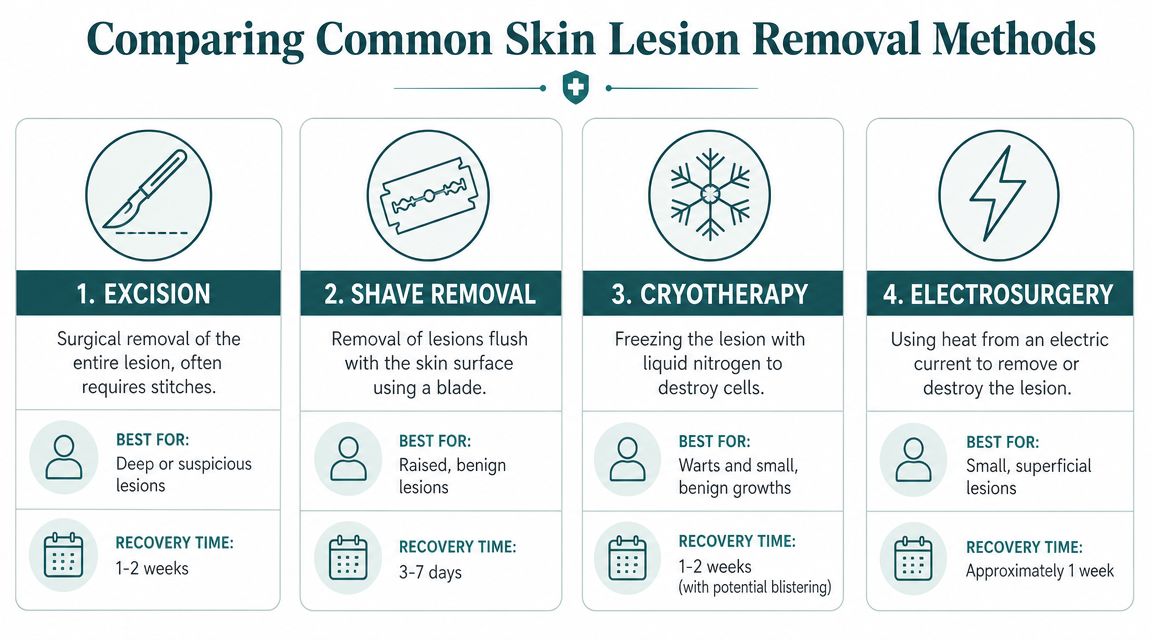
Skin lesion removal methods at a glance
| Method | Best For | Procedure Time | Requires Stitches | Best for Diagnosis |
|---|---|---|---|---|
| Excision | Deeper lesions, suspicious lesions, lesions needing full removal | Often longer than simpler surface treatments | Usually yes | Yes |
| Shave removal | Raised benign lesions on the surface | Usually quick | No | Limited |
| Cryotherapy | Some small benign growths such as warts | Usually quick | No | No |
| Electrosurgery | Small superficial lesions | Usually quick | Not usually | No |
| Laser or light-based methods | Selected superficial lesions where tissue diagnosis is not the main aim | Varies | No | No |
Excision
Excision means cutting out the whole lesion, often with a small rim of normal-looking skin around it. If your doctor wants certainty, this is usually the method that gives it.
From a patient’s point of view, excision is often more straightforward than it sounds. The injection of local anaesthetic usually stings briefly. After that, people commonly feel pushing, pulling, or movement rather than sharp pain. The trade-off is that healing usually involves stitches, a dressing, and a line-shaped scar.
This option is often chosen when a lesion is deep, unusual-looking, changing, or difficult to identify confidently.
Shave removal
Shave removal removes a lesion at or just above the skin surface with a blade. It is commonly used for raised, clearly benign-looking lesions.
A useful way to picture it is this. If a bump is sitting mainly on top of the skin rather than rooted within it, shaving can remove the visible part without making a deeper cut that needs stitching. That is why recovery often feels simpler.
The limitation matters. If there is meaningful doubt about what the lesion is, shave removal may not be the right choice because it may not preserve the full structure the pathologist needs to assess.
Cryotherapy
Cryotherapy destroys tissue by freezing it. It is often used for superficial benign lesions, especially warts and some sun-damaged spots.
The feeling is brief but memorable. People often describe a sharp cold burn, then stinging or soreness for a while afterwards. The area can blister, crust, darken, or look worse before it looks better. That can be unsettling if no one has warned you, but it is a common part of healing after freezing.
Because the tissue is destroyed, cryotherapy is less helpful when a proper laboratory diagnosis is needed.
Electrosurgery
Electrosurgery uses heat from an electric current to remove or destroy tissue. It can also help seal small blood vessels at the same time.
For patients, this is usually used for small superficial lesions where the diagnosis is already reasonably clear. Healing often involves a scab that gradually lifts off as the skin repairs underneath. As with cryotherapy, it is less suitable if the main question is, “What exactly is this under the microscope?”
Laser and light-based treatment
Laser or light-based treatment is usually reserved for carefully selected superficial lesions where the diagnosis is already clear and the main aim is removal rather than testing.
This matters for decision-making. If you are asking, “Should I remove it because it worries me medically, or because I dislike how it looks?”, laser treatment tends to sit more on the cosmetic side of that line. It can be useful in the right setting, but it is not usually the first choice if cancer is part of the concern because the tissue may be altered or destroyed.
Some people are less worried about the procedure than about the mark left after it heals. For concerns about lingering colour change, consider reading about scientifically-grounded hyperpigmentation solutions.
Why one person gets stitches and another doesn’t
The short answer is depth.
Superficial lesions can often be shaved, frozen, treated with heat, or sometimes managed with laser. Lesions that extend deeper into the dermis usually need a fuller cut to remove them properly, and deeper cuts usually need stitches to bring the skin edges back together neatly.
So if you are trying to decide what removal will feel like and what recovery will involve, the practical question is not “Which method is easiest?” It is “Which method fits the job safely?” When the goal is diagnosis, preserving tissue comes first. When the diagnosis is already clear and the lesion is superficial, less invasive methods may be reasonable.
Your Procedure Journey From Consultation to Recovery
You book an appointment because a mole, cyst, or skin tag has been on your mind for weeks. By that point, the question often changes. It is no longer only, “Should I remove it?” It becomes, “What will the appointment feel like, and what happens afterwards?”
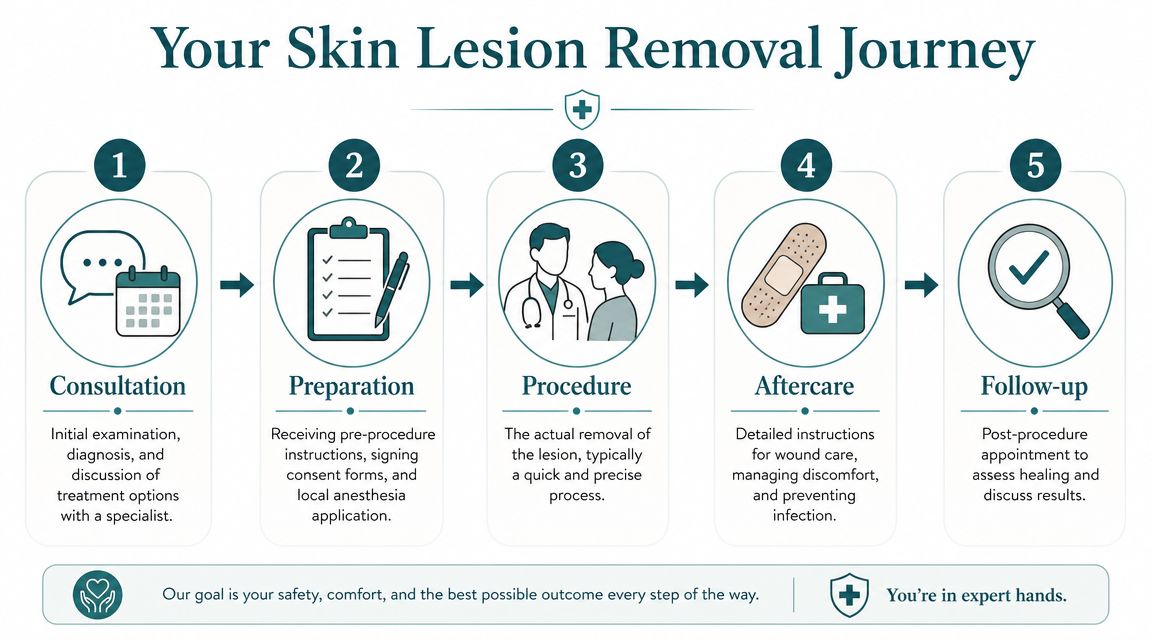
A skin lesion procedure is usually more ordinary than people expect. The unknown is often the hardest part, so it helps to break the journey into stages.
The consultation
The first appointment is part detective work, part planning. Your clinician will look closely at the lesion and ask how long it has been there, whether it has changed, and whether it bleeds, catches on clothing, hurts, or bothers you cosmetically.
They will also ask about your general health, medicines, allergies, and any history of skin cancer. If the lesion looks straightforward, the discussion may be about whether removal is sensible and which method fits best. If there is any doubt about the diagnosis, the priority may shift toward getting a sample or arranging a specialist opinion.
This is an important decision point in the UK. Some lesions are removed because they are suspicious, troublesome, or repeatedly inflamed. Others are removed mainly because of appearance or comfort. Knowing which side of that line your situation falls on helps set expectations about NHS eligibility, private treatment, and whether the aim is diagnosis, symptom relief, or cosmetic improvement.
The day of the procedure
Many removals are done in an outpatient setting with local anaesthetic. In plain English, that means you stay awake, the area is numbed, and you usually go home the same day.
The procedure itself often feels less dramatic than the build-up to it. There is paperwork, a quick check that everyone agrees on what is being removed, and then the skin is cleaned. If the plan involves sending tissue to the lab, that will usually be explained again before starting.
What local anaesthetic feels like
This is the part patients ask about most.
The numbing injection often feels like a short sharp sting, followed by a burning or pushing sensation that fades quickly. After that, the area should feel numb. A useful comparison is dental anaesthetic in the mouth. You still know something is happening, but sharp pain should be blocked.
During the procedure, you may notice:
- Pressure
- Tugging or movement
- A little heat, cold, or vibration, depending on the method used
You do not need to stay silent if something feels painful. Tell the clinician. The aim is a numb area, not merely getting through it.
Straight after removal
Once the lesion is off, the site is usually cleaned and covered. If you have had a shave removal, it may look a bit like a graze. If you have had a deeper excision, it may be closed in a neat line with stitches.
Before you leave, you should be clear about a few practical points:
- How to wash or protect the area
- Whether the dressing stays on or needs changing
- What discomfort is expected over the next day or two
- Who to contact if the wound becomes more painful, red, or starts oozing
- Whether tissue has been sent for testing and how you will get the result
That last point matters. If a lesion is removed partly to confirm what it is, recovery is not only about the skin healing. It is also about knowing when to expect the result and what the next step would be if it showed anything unexpected.
Recovery in the first days
Healing depends on the method used, the body site, and whether stitches were needed. Skin on the back, shoulders, and lower legs can be slower or trickier to heal than skin on the face. Areas that rub on clothing or move a lot often stay sore for longer.
Many people can get back to normal daily tasks quickly, but “normal” is not the same as “ignore it.” A fresh wound heals best when it is protected from friction, kept clean, and given time to seal. Good sleep, enough protein, and measures that may optimise skin healing with vitamins can support the repair process in the background.
A helpful way to think about recovery is this. The removal may take one appointment. The healing is the part your skin does over the following days and weeks. Knowing that in advance makes the whole process feel more predictable, which is often what worried patients need most.
Aftercare and Managing Potential Risks
Good aftercare doesn’t need to be complicated, but it does need to be consistent. The skin heals best when you protect the wound, keep it clean, and avoid disturbing the area unnecessarily.
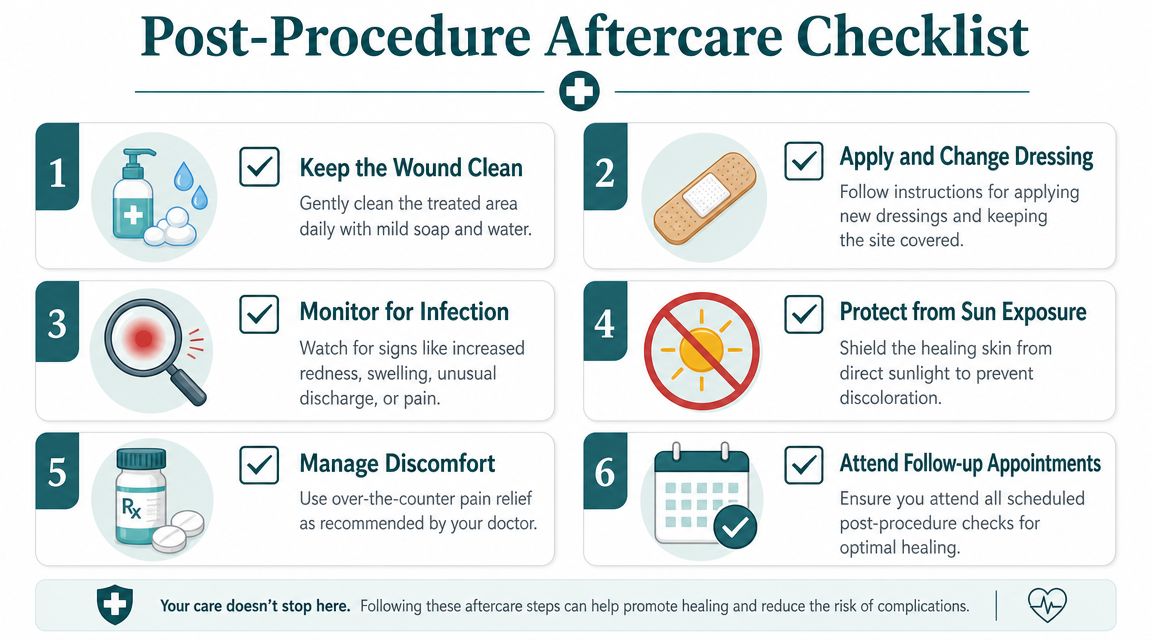
The basics for the first days
A fresh wound usually benefits from a simple routine.
- Keep it clean by following the instructions you were given about washing or wiping the area.
- Leave the dressing alone for the time advised, unless it becomes wet, loose, or soiled.
- Avoid friction from tight clothing, shaving, sports equipment, or repetitive rubbing.
- Take pain relief if needed using the option your clinician has recommended for you.
- Don’t pick scabs or peel healing skin, even if it’s tempting.
What healing usually looks like
People often worry that normal healing means something has gone wrong. Mild redness, tenderness, a little swelling, or a dry scab can all happen after skin procedures.
The appearance depends on the method used. A shaved lesion may look like a graze. An excision usually looks like a straight line with or without visible stitches. Cryotherapy can lead to blistering or crusting before it settles.
When to get advice
Contact the clinic or your GP if you notice:
- Increasing redness spreading beyond the wound
- Pus or unusual discharge
- Worsening pain rather than gradual improvement
- Fever or feeling unwell
- Bleeding that doesn’t settle
- Wound edges pulling apart
A healing wound should gradually become quieter. If it’s becoming hotter, wetter, or more painful, ask for review.
Scarring and skin quality afterwards
Any treatment that removes skin can leave a mark. The aim is usually to leave the smallest, neatest scar compatible with safe treatment, not to promise invisible healing.
Scar appearance is influenced by location, skin type, wound tension, your own healing pattern, and whether the wound is protected from sun and trauma.
Navigating Your Healthcare Options in the UK
In the UK, there are two main routes for the removal of skin lesions. You can start with the NHS pathway through your GP, or you can choose a private consultation.
The NHS route
If the lesion looks suspicious, is changing, or causes symptoms, your GP can assess it and decide whether you need monitoring, treatment, or referral. This is the right first route for many medically necessary concerns.
For clearly benign lesions, access can be more limited. That’s especially true when the reason for removal is largely cosmetic or reassurance-based rather than clinical necessity. That can be frustrating for patients, but it reflects how NHS commissioning decisions are made.
The private route
Private care tends to suit people who want faster access, appointment flexibility, and the option to discuss treatment choices in more detail, especially when the lesion is bothersome but may not meet NHS treatment criteria.
This route may also appeal if:
- You want an earlier opinion for peace of mind
- You prefer choice of clinic or consultant
- You need treatment planning around work, school, or family commitments
- You’re seeking removal for comfort or appearance
Some people start with the NHS and then decide they’d rather not wait. Others know from the outset that they want a private assessment because the lesion affects confidence, catches repeatedly, or causes ongoing worry.
Choosing what’s right for you
The best route is the one that fits the nature of the lesion and your own priorities. If there’s genuine concern about cancer, don’t delay getting it checked. If the issue is mostly cosmetic or practical, private assessment may be the more straightforward option.
If you’d like to explore that route, you can visit the Haven Medical website for information about private GP and consultant-led services, or click to book and call to book if you’re ready to discuss a lesion in person.
Frequently Asked Questions About Lesion Removal
Will it leave a scar
Usually, yes, at least to some degree. A small flat mark may fade well over time, while a deeper excision usually leaves a line. The aim is a well-healed scar, not no scar at all.
Is the procedure painful
Patients often feel the local anaesthetic injection more than the procedure itself. Once numb, you’re more likely to notice pressure or pulling than sharp pain.
Can children have skin lesions removed
Yes, but the decision is made carefully. The child’s age, the lesion type, the reason for removal, and how well they’ll tolerate the procedure all matter. Some lesions in children are best monitored unless there’s a clear reason to remove them.
How much does private removal cost
Costs vary depending on the consultation, the procedure used, whether histology is needed, and the complexity of the lesion. The most useful approach is to ask for a clear written quote after assessment, because the safest method may not be obvious from appearance alone.
If you’ve got a lesion that’s changing, catching, bleeding, or causing persistent worry, getting it assessed is a sensible next step. You don’t need to decide the method on your own. You just need a proper examination, a clear explanation, and a plan that fits your situation.